


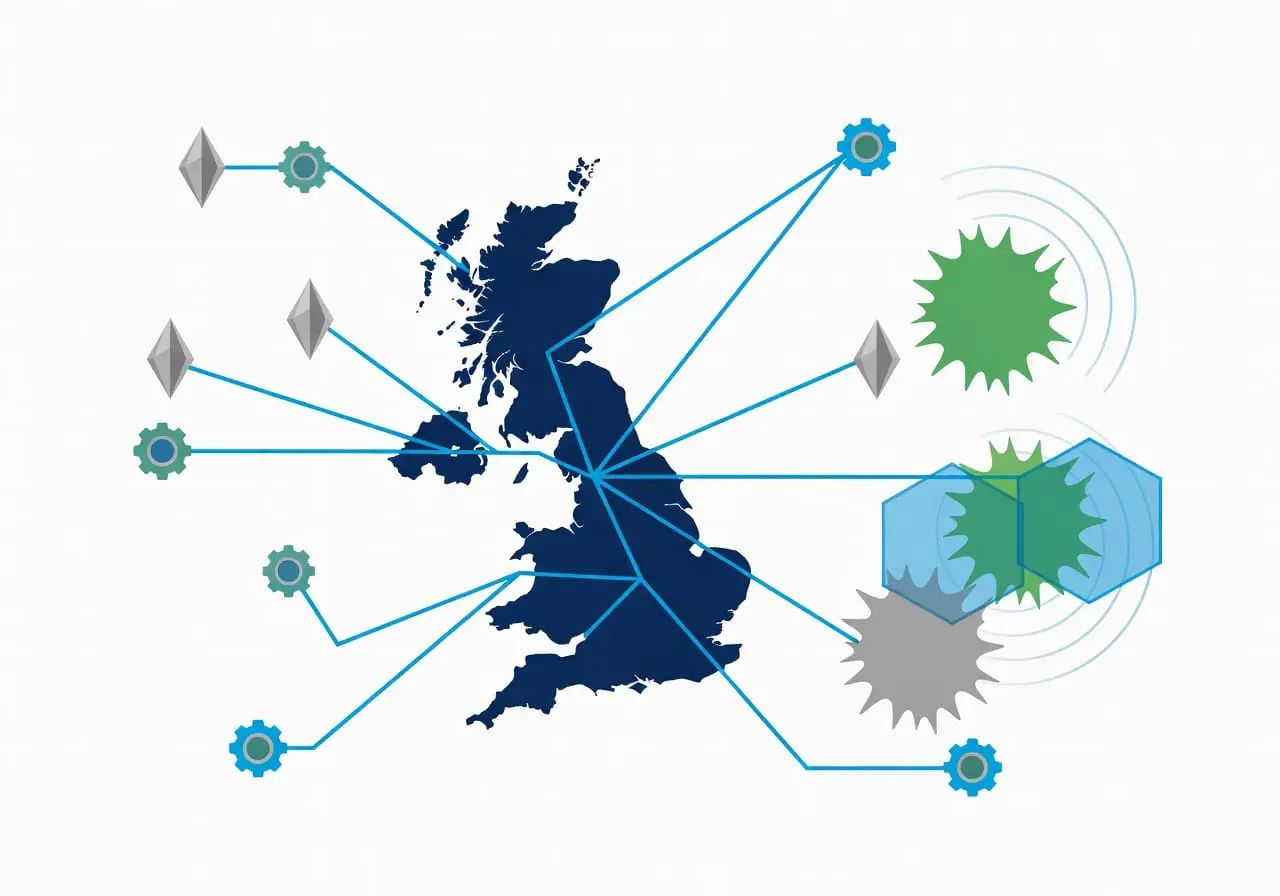
The UK is developing AI-powered environmental monitoring to detect novel pathogens weeks before they cause widespread illness, addressing growing biosecurity risks from advancing biotechnologies.
The rapid advancement of gene editing tools, synthetic biology, and artificial intelligence has created a profound paradox for public health: the same technologies enabling life-saving medical breakthroughs are simultaneously making it easier for actors with malicious intent to engineer dangerous pathogens. To address this dual-use challenge, the UK government is pioneering a new generation of surveillance systems designed to catch emerging biological threats at their earliest stages, potentially averting catastrophic disease outbreaks.
The threat landscape has shifted dramatically in recent years. Pathogens are evolving, dual-use biotechnologies are proliferating globally, and biological threats from both state and non-state actors remain persistent concerns. Sequencing costs have fallen 100-fold over the past decade, whilst artificial intelligence capabilities for analysing genetic sequences have improved dramatically. This convergence means that engineered pathogens—whether arising from accidents or deliberate acts—pose a more realistic threat than ever before.
The UK’s Integrated ResponseIn response, the UK government has reaffirmed its commitment to strengthening national and global biosecurity through a comprehensive Biological Security Strategy centred on four pillars: Understand, Prevent, Detect, and Respond. A major achievement under this strategy has been the launch of the Biothreats Radar, an integrated surveillance platform that combines open-source and classified data to deliver near real-time insights into global biological threats. This system now supports decision-making across UK government departments.
However, experts argue the UK must go further. A significant vulnerability exists in the nation’s pre-clinical environmental detection capabilities—the ability to spot novel pathogens in the environment before members of the public fall ill and present to hospital. Whilst the UK Health Security Agency is developing world-leading clinical biosurveillance programmes, notably the mSCAPE initiative, these remain relatively small in scale.
UK SONAR: Next-Generation Early WarningTo address this gap, researchers have proposed UK SONAR—a Surveillance Observatory for Nucleic Acid Recognition. This AI-enabled system would monitor environmental samples from major airports and urban centres, focusing particularly on wastewater surveillance. Using advanced metagenomic sequencing combined with artificial intelligence, UK SONAR could identify emerging pathogens—whether natural, accidental, or deliberately engineered—days to weeks before conventional surveillance methods would detect them.
The concept harnesses the power of environmental monitoring. Rather than waiting for infected individuals to seek medical attention, the system would scan wastewater and other environmental sources for genetic material from novel or dangerous organisms. Artificial intelligence would then analyse these sequences in real-time, using anomaly detection to automatically flag suspicious signals for human review and escalation. This approach has proven effective in other contexts, such as wastewater surveillance for polio and COVID-19.
The proposed strategic pilot would begin with surveillance at a single airport and ten wastewater sites, with an estimated cost of £15 million in the first year. Full implementation would require approximately nine dedicated personnel and yearly running costs of £10 to £30 million as the system scales across airports and wastewater monitoring stations nationwide.
Complementary Detection InfrastructureBeyond environmental surveillance, the UK has established other critical detection capabilities. The Microbial Forensics Consortium, launched in 2023, now links ten laboratories across the country to detect and attribute biological incidents, including potential misuse of synthetic biology. New rapid diagnostic platforms, including bedside metagenomic testing, have dramatically reduced the time required to detect respiratory and foodborne pathogens—critical for distinguishing natural outbreaks from engineered threats.
The UK is also pioneering responsible innovation safeguards. A Responsible Innovation Advisory Panel has published voluntary screening guidance for synthetic nucleic acids, reinforcing oversight of emerging biotechnologies and attempting to balance security with the legitimate needs of research and industry.
International Leadership and GovernanceThese initiatives reflect a “whole-of-government” approach anchored by formal governance structures within the Cabinet Office. The UK has established a US-UK Strategic Dialogue on Biological Security and integrated biological security into high-level discussions with the European Union. Plans are underway for a network of National Biosecurity Centres, with major facility upgrades planned for Weybridge and a new UK Health Security Agency National Biosecurity Centre.
This coordinated strategy positions the UK as a global leader in proactive biosecurity, contrasting with more fragmented approaches elsewhere. The emphasis on early detection, prevention, and international cooperation reflects the reality that biological threats transcend borders.
Source: @bmj_latest
Key Takeaways
- Advanced surveillance systems like UK SONAR aim to detect novel pathogens in environmental samples weeks before people become ill, providing crucial early warning.
- Artificial intelligence and metagenomic sequencing now make large-scale environmental monitoring technically feasible and cost-effective.
- The UK Biological Security Strategy integrates detection capabilities across clinical networks, microbial forensics, and environmental surveillance to strengthen resilience against biological threats.
What This Means for Kent Residents
For Kent residents, these developments translate into enhanced protection against emerging biological threats. Kent and Medway NHS Trust, alongside other NHS trusts in the South East, will benefit from improved early warning systems that could alert healthcare providers to novel pathogens before widespread community transmission occurs. Should wastewater monitoring be implemented at Kent’s major transport hubs, the region would be amongst the first to detect potential threats. Residents seeking information about biosecurity measures or pandemic preparedness can contact their local NHS services through NHS 111, whilst the UK Health Security Agency provides regular updates on biological security matters through official government channels.