
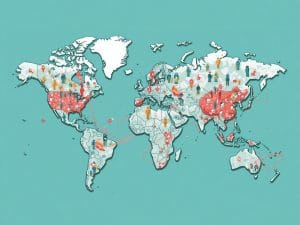
The British Medical Journal highlights worldwide health investment as collective security amid America’s retreat from multilateral cooperation.
The world’s health systems are facing a geopolitical reckoning. The British Medical Journal has posted a stark message about the connection between global health and political stability, arguing that investing in health worldwide serves as a collective security strategy.
America Steps Back
The 2025 US National Security Strategy marks a decisive shift towards an “America First” approach. This reframes global public goods like disease surveillance and climate action as national burdens rather than shared responsibilities. The US withdrawal from the World Health Organization signals reduced multilateral engagement, creating risks for fragmented global health coordination.
But this isn’t just about America stepping back from the world stage. The ripple effects reach across the Atlantic, potentially increasing burdens on European health systems and surveillance networks.
The US 2024 Global Health Security Strategy does prioritise bilateral partnerships and political commitment to enhance prevention, detection, and response to infectious diseases. Yet critics worry this bilateral focus could weaken the coordinated global response that proved so vital during COVID-19.
Europe Must Fill the Gap
European health officials are already adapting to this new reality. The EU Global Health Strategy to 2030 prioritises improving global health security through policy frameworks aimed at better health outcomes worldwide. This represents Europe’s attempt to maintain multilateral cooperation even as the US pulls back.
The World Health Organization defines global public health security as activities to minimise vulnerability to acute public health events that endanger populations across borders. Post-COVID discussions have broadened collective security to include health crises, framing pandemics as threats to peace and security within UN frameworks.
A Multipolar Health World
Some experts see opportunities in this shift towards multipolar global health politics. They argue for “values-based realism” to balance geopolitical competition with health equity and cooperation. This approach could give low- and middle-income countries more influence in advancing health sovereignty.
The challenge lies in maintaining effective disease surveillance and response systems when major powers prioritise national interests over global coordination.
Source: @bmj_latest
Key Takeaways
- US “America First” policy treats global health cooperation as a burden rather than shared responsibility
- European health systems face increased pressure as America reduces multilateral engagement
- Multipolar approach to global health could offer new opportunities for international cooperation
What This Means for Kent Residents
Kent residents may face heightened risks from fragmented global health security, especially affecting cross-border disease surveillance via Channel ports and the Eurotunnel. NHS Kent and Medway ICB coordinates local responses to international health threats, including migrant health screenings at borders, but reduced global cooperation could strain these systems. Residents should stay informed via the NHS app and UK Health Security Agency for travel-related health risks, and consult NHS 111 for health concerns or their GP for travel health advice before international trips.
BMJ Calls for Global Health Investment as Security Strategy Amid US Policy Shifts Quiz
5 questions