
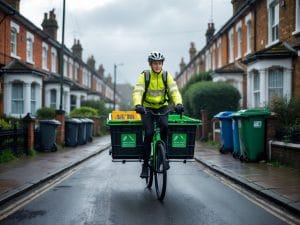
A low-cost composting model built around cargo bikes and youth employment is drawing attention — and Kent’s waste targets and green jobs agenda make it worth a serious look.
The Idea in Plain Terms
The concept is simple enough to sketch on a napkin. Residents and small businesses pay around £10 for regular food scrap collections by bike, the waste gets composted locally, young people get paid to do the rounds, and the neighbourhood ends up with less rubbish in the bin and more soil for community gardens.
Almost too tidy. But versions of this model are already running in urban areas abroad, where small social enterprises use pedal-assisted cargo bikes to collect food scraps from hundreds of households and businesses within a single neighbourhood. Collected waste is weighed, tracked and composted close to where it was generated — keeping the supply chain short and the carbon footprint low.
Why Kent Keeps Coming Up
Kent isn’t starting from scratch here. Canterbury, Thanet, Ashford and other district councils already run kerbside food caddy collections, with the material going to anaerobic digestion plants and composting facilities under national waste regulations. Kent County Council’s climate and environment strategies explicitly target reduced residual waste, higher recycling rates and more green jobs. So the question isn’t whether Kent has the appetite for this kind of thinking — it’s whether a bike-based micro-collection model could slot in alongside existing services rather than cutting across them.
According to the council’s own climate plans, urban areas including Canterbury, Maidstone, Medway, Dartford and Gravesend are among the priority zones for cutting emissions and supporting local environmental employment. Exactly the kind of places where cargo bike logistics make most sense.
The Numbers, Roughly Speaking
No identical Kent scheme exists yet, so any figures are illustrative. Run the maths on a single urban district, though: 500 households and 20 small businesses each putting out a few kilograms of food scraps a week could divert around 90 tonnes of food waste from residual bins every year. On top of existing council collections, not instead of them.
And for small businesses — cafés, greengrocers, restaurants — a visible, locally branded bike collection could sharpen their sustainability credentials at a time when customers are increasingly paying attention to that sort of thing.
The Complications Are Real
Waste management professionals and local authorities would rightly ask hard questions about hygiene standards, insurance, licensing and data reporting before anything like this got off the ground. Food waste handling is regulated for good reason. Sensible, that.
There are workforce questions too. Existing waste collection workers and their unions would have legitimate concerns if a cheaper bike-based service undercut established operators or eroded pay standards. Residents already contributing to council tax-funded collections might reasonably ask what the extra £10 actually buys them. Any pilot would need to focus on genuine gaps — small businesses with limited affordable options, community buildings, schools or charities wanting more visible local composting — rather than duplicating what councils already do well.
What Comes Next
No confirmed Kent pilot to report. But with the county’s waste reduction targets tightening and youth unemployment still a concern in several districts, the model deserves a proper conversation between councils, community groups and local businesses.
—
Key Takeaways
- A cargo bike food waste collection model, costing households around £10 per collection, has proven workable abroad and could align with Kent’s waste and climate goals
- Any Kent version would need to work alongside — not against — existing council kerbside food waste services and comply with UK waste handling regulations
- The model offers potential entry-level green jobs for young people in Kent, especially in higher-density urban areas with limited home composting options
What This Means for Kent Residents
If a pilot ever lands in Kent, residents in flats or terraced streets without garden space would likely be first to benefit — they’re the households most likely to bin food scraps rather than compost them at home. Small business owners, especially in town centres, could find a flexible local collection more practical than current commercial waste contracts. For now, anyone wanting to cut their food waste can check their district council’s website for caddy collection schedules and local community composting projects already running across the county.
Could £10 Bike Collections Turn Kent's Food Waste Into Local Jobs? Quiz
5 questions