
The number of Disabled Facilities Grants completed in Dartford rose from 28 in 2023-24 to 85 in 2025-26, a 204% increase, as the council’s Overview and Scrutiny Committee considered a detailed briefing on the scheme at its meeting on 10 November 2026.
The number of home adaptations completed under Dartford Borough Council’s Disabled Facilities Grant (DFG) programme more than trebled over three years, rising from 28 completions in 2023-24 to 85 in 2025-26, according to papers considered by the Overview and Scrutiny Committee when it met on 10 November 2026.
What the grant covers
A Disabled Facilities Grant is a mandatory grant towards the cost of adaptations for a disabled person, funded by the government through the Better Care Fund (BCF). Eligible works include widening doorways, installing ramps, stairlifts, level-access showers, downstairs extensions and adaptations to heating or lighting controls. The maximum grant payable is £30,000. Grants are available to owner-occupiers, private tenants and housing association tenants, though adaptations for council tenants are funded separately through the Housing Revenue Account.
Applicants whose household receives means-tested benefits — including Universal Credit, Housing Benefit, Income Support and Guarantee Pension Credit — are not required to make a financial contribution. Disabled children and young people under 19 are not means-tested.
Sharp rise in activity
The committee papers set out figures showing significant growth across the service. Grants approved rose from 38 in 2023-24 to 63 in 2025-26, a rise of 66%. Applications entering the formal grant stage increased to 105 in 2025-26. The number of grants completed for residents aged 66 and over rose from 13 to 62 over the same period.
Average processing times also improved. The time taken between identification of works and submission of a formal application — Stage 2 — fell from an average of 110 days in 2023-24 to 90 days in 2025-26.
Expenditure from the Better Care Fund allocation rose from £455,268 in 2023-24 to £785,312 in 2025-26, against a BCF allocation of £848,188 in the most recent year. The papers noted that in each of the three years, expenditure remained below the allocated budget and underspends were carried forward.
Occupational therapist post
The council funds a full-time occupational therapist post on secondment from Kent County Council, paid for from the Better Care Fund, to prevent delays arising from KCC’s own waiting lists. An occupational therapist assesses each disabled person’s needs and works with them to identify suitable solutions before works are approved.
The council does not hold a waiting list for DFGs. The papers stated there is a statutory obligation to administer mandatory grants regardless of whether funding is available at the time of application, and that to date there has been no issue with budget allocation being insufficient to meet demand.
Land charges and repayment
Where an owner-occupier receives a DFG payment exceeding £5,000, the council registers a local land charge against the property. If the property is sold or disposed of within 10 years of the works being completed, the council may seek repayment of the portion of the grant above £5,000, up to a maximum of £10,000. In 2025-26, the council received £11,063 in receipts from redeemed land charges.
The council had not published the minutes of the meeting at the time of writing, so the committee’s decision is not yet on the public record.
Sources
- Dartford Borough Council — Overview & Scrutiny Committee, 10 November 2026 (agenda and papers)
- Briefing on Disabled Facilities Grants (DFG) — Overview & Scrutiny Committee, Dartford Borough Council, 10 November 2026
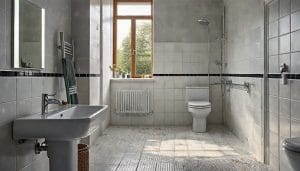
Top image: illustrative, computer-generated. Illustrative AI-generated image of a level-access wet room adaptation. This is not a photograph of any real property or Dartford Council scheme.