
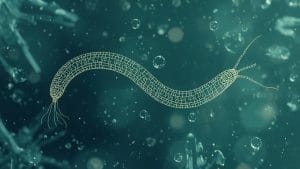
A case of thelaziasis — a parasitic eye infection caused by worms — has been published in the New England Journal of Medicine’s Images in Clinical Medicine series.
The New England Journal of Medicine (NEJM) has posted a clinical image case of thelaziasis, a rare condition in which parasitic worms (thelazia species) infect the surface of the eye. The journal shared the case under its Images in Clinical Medicine series, which highlights unusual or instructive presentations seen by clinicians.
Thelaziasis is caused by small roundworms that live in the conjunctival sac — the moist tissue lining the inside of the eyelid and covering the white of the eye. The infection is transmitted by fruit flies, which act as intermediate hosts and deposit larvae onto the eye during feeding. It is most commonly reported in parts of Asia, Europe, and North America, according to published infectious disease literature.
Symptoms can include eye irritation, excessive tearing, a sensation of something moving in the eye, and redness. In some cases, worms are visible to the naked eye or under a slit-lamp examination by an ophthalmologist.
The condition is treatable. Worms are typically removed manually by a clinician, and antiparasitic medicines may be prescribed alongside.
For their part, the NEJM case was tagged under both infectious disease and ophthalmology, reflecting the crossover nature of the condition — it sits at the boundary of two specialties.
Thelaziasis remains rare in the UK. But anyone experiencing persistent unexplained eye irritation, especially after travel to affected regions, should contact their GP or call NHS 111 for advice. Do not attempt to remove anything from the eye yourself.
Key information
- Eye symptoms after travel: Contact your GP or call NHS 111 (dial 111) if you have persistent eye irritation, redness, or a sensation of movement in the eye following travel abroad
- Emergencies: If you have sudden severe eye pain or vision loss, call 999 or go to your nearest A&E
Source: @NEJM
Eye Worm Infection: What the New England Journal of Medicine Has Shared Quiz
5 questions