
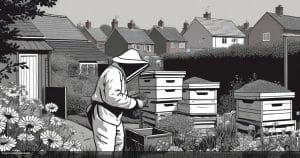
Folkestone & Hythe District Council is urging residents to report sightings of the yellow-legged Asian hornet after one was captured in Folkestone in April 2025, as national figures show a sharp rise in UK incursions.
Beekeepers, gardeners and anyone spending time outdoors in Folkestone & Hythe are being asked to keep an eye out for a small but distinctive invader. The yellow-legged hornet — also known as the Asian hornet, or Vespa velutina — is a non-native species originally from Asia that has been spreading across western Europe since it arrived accidentally in France around 2004. It’s about the size of a two pence piece, with a dark body, orange face, striped abdomen and — as the name suggests — bright yellow legs.
The concern isn’t really about danger to people. Official guidance from Defra and the National Bee Unit states that the hornet poses no greater health risk to humans than a native wasp or hornet, though people with known sting allergies should take care. The real worry is what it does to bee colonies. As a predator that hunts at hive entrances, a single established nest can cause serious losses to honey bee colonies — and that matters for anyone who keeps bees, grows fruit and vegetables, or simply relies on pollinators doing their job in local gardens and farmland.
The numbers tell a stark story. Just 23 confirmed UK sightings were recorded between 2016 and 2022. Then in 2023 alone, 72 nests were found across 56 locations. By July 2024 the total had passed 120 confirmed sightings, and Defra now puts the cumulative figure at 158 since 2016 — with 13 confirmed so far in 2025. One of those was right here: a single hornet was captured in Folkestone on 19 April 2025.
The species isn’t yet established in the UK — rapid eradication by specialist teams after each confirmed sighting has so far kept it that way. But conservationists point to what’s happened across France, Spain and the Netherlands as a warning of how quickly that can change once a population takes hold.
Not everyone is entirely comfortable with how the message is being framed, though. Some beekeeping and environmental groups argue that warnings about a single invasive predator can overshadow broader threats to pollinators — habitat loss, pesticide use, disease — that deserve equal attention. There are also questions about whether repeated annual eradication campaigns are sustainable long-term, and whether the pesticides used in nest destruction carry any risk to non-target species nearby.
Others worry that high-profile awareness campaigns can lead residents to misidentify native hornets and wasps — which are harmless and ecologically useful — and report them unnecessarily, or worse, try to deal with nests themselves. The council’s guidance is firm on that point: do not disturb any suspected nest, and don’t attempt to remove it. Leave that to the specialists.
According to Folkestone & Hythe District Council’s awareness material, the hornets are most active between April and November, with August and September being the peak months — so the season is well under way.
Key information
- To report a sighting: Download the free Asian Hornet Watch app (available for Android and iPhone), or use the GB Non-Native Species Secretariat online reporting form or email
- What to include: A clear photograph, a description of the insect, and a precise location — this helps experts verify the record and, if needed, dispatch a team to locate and destroy any nest
- Do not attempt to disturb, move or destroy a suspected nest yourself — contact the official channels and wait for a specialist response
- Active season: Yellow-legged hornets are typically present April to November; peak activity runs August to September