
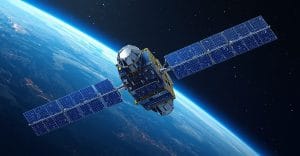
Google’s Project Suncatcher prototype satellite has generated an AI response in orbit using an onboard Tensor Processing Unit and the Gemma 4 language model.
Google has announced what it describes as a “Hello World” milestone for space-based artificial intelligence: the first AI response generated by a data-centre-class Tensor Processing Unit operating in orbit. The announcement came on 30 October 2026, according to Google Research, and involves the company’s Project Suncatcher prototype satellite carrying four of the company’s own TPU chips into low Earth orbit.
The initial test was, by design, modest. Gemma 4 — the open model developed by Google DeepMind — was prompted to write a haiku about being in space. The resulting poem was then transmitted to Earth as the satellite passed over a ground station in Svalbard, Norway. It’s a small thing, on the face of it. But Google is framing it as proof that data-centre-class inference can, in principle, run beyond the atmosphere.
Google’s post announcing the milestone contained a grammatical slip — the phrase “The first TPU in space is a running” appears to have been intended as “The first TPU in space is running” — though the underlying claim has been reported consistently across Google Research and TechCrunch. Whether this is genuinely the first TPU ever placed in orbit has not been independently verified by a UK official source; the characterisation reflects Google’s and TechCrunch’s own framing.
What Project Suncatcher Is Actually Trying to Do
Project Suncatcher is Google’s research programme exploring whether networks of satellites could carry out hefty AI workloads directly in orbit, rather than routing all data down to terrestrial data centres for processing. The prototype was launched aboard a SpaceX Falcon 9 rideshare mission in October 2026, according to reporting citing Google and TechCrunch.
The satellite carries four TPUs, though only one can operate at a time. According to TechCrunch, that single active TPU can run for around 20 minutes before the operational window closes. The satellite generates up to 1 kilowatt of electricity — modest by terrestrial data-centre standards, but the point is to demonstrate that meaningful inference is possible at all.
Google’s stated rationale is that solar power harvested in space, combined with networked satellites, could eventually support AI processing without the land and energy demands of ground-based infrastructure. That case, for now, remains unproven.
The Engineering Challenges That Remain
A haiku is a long way from a data centre. The demonstration establishes that onboard inference works; it doesn’t resolve the major engineering questions that surround the broader proposal.
Power, cooling, communications bandwidth, protection from cosmic radiation, launch costs, and the near-impossibility of on-orbit maintenance all sit between this prototype and any commercially viable orbital computing network. The satellite’s 1-kilowatt power generation, while sufficient for a short poetry prompt, is a fraction of what even a modest terrestrial server rack consumes continuously.
Planet, the satellite-imaging company, has been reported as a partner in secondary coverage of the project, though the precise scope of that relationship was not detailed in available sources.
Wider Questions the Test Raises
The demonstration has drawn attention to a set of longer-term concerns that go beyond the engineering. Further deployment of AI-capable satellites at scale could contribute to orbital congestion and space debris accumulation. Launch emissions, astronomical interference from satellite constellations, and the governance of increasingly capable systems operating beyond national airspace are all questions that researchers and regulators have begun to raise — though none have been formally linked to Project Suncatcher specifically.
No UK government department, regulator, or official body has issued a response to the announcement, according to available sources. The UK does maintain active policy frameworks covering artificial intelligence, satellite spectrum, and space activities, but no specific UK regulatory position on orbital AI processing has been identified.
The gap between what this test proves and what Google’s broader vision requires is considerable. Generating a short poem in orbit is a genuine engineering milestone; it is not, on its own, evidence that orbital data centres are economically viable, environmentally beneficial, or technically safe at scale.
What This Means for Kent Residents
There is no direct or verified impact on Kent residents, businesses, or public services from this announcement. Over a longer timeframe, however, advances in satellite-based computing could affect UK cloud infrastructure, data costs, and the space-technology sector — areas in which British companies and universities are active. For now, this is a research milestone to watch rather than a change that will reach anyone’s broadband bill or workplace in the near term.
Source: @TechCrunch
Google Satellite Runs Gemma 4 AI Model on First Data-Centre-Class TPU in Orbit Quiz
5 questions