
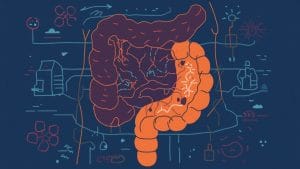
The New England Journal of Medicine has shared research highlighting how the method used to feed patients in hospital can have a direct impact on gut health and recovery.
When Eating Normally Isn’t an Option
Most of us don’t give much thought to how hospital patients are fed when they can’t eat normally. But for critically ill people — those recovering from major surgery, serious illness, or trauma — the question of whether nutrition is delivered through a tube into the gut or through a drip into the bloodstream can make a real difference to how well they recover.
That’s the focus of research shared by the New England Journal of Medicine, one of the world’s most respected medical publications. The post points to a body of evidence comparing two approaches: enteral nutrition, which delivers food directly into the digestive tract, and parenteral nutrition, which bypasses the gut entirely and feeds patients intravenously.
What the Research Actually Shows
According to the research cited by the journal, parenteral nutrition — and simply receiving nothing by mouth at all — can impair gut health in measurable ways. Specifically, these approaches are associated with reduced epithelial-cell proliferation, which in plain English means the cells lining the gut aren’t renewing themselves as they should. There’s also increased apoptosis — a process where cells essentially self-destruct — and disruption to what’s known as mucosal integrity, the protective lining of the digestive tract.
Enteral nutrition, by contrast, appears to support gut function rather than hinder it. The research points to enhanced expression of tight-junction proteins — the molecular “seals” that hold gut lining cells together and help prevent harmful substances from leaking into the bloodstream.
These aren’t small, theoretical distinctions. The gut lining is a frontline defence for the immune system, and damage to it during a hospital stay can contribute to complications that slow recovery.
Why This Matters Beyond the Laboratory
For patients and families, understanding that nutrition choices during critical illness carry real physiological consequences is genuinely useful. It’s the kind of evidence that shapes clinical guidelines and informs the decisions doctors and dietitians make at the bedside.
Clinicians have long debated the optimal approach to feeding critically ill patients, and research like this adds to an evidence base that NHS hospitals draw on when developing nutrition protocols.
It’s worth being clear: this is published medical research, not a change in NHS policy. Anyone with questions about nutrition during a hospital stay should speak directly to their care team or contact NHS 111 for guidance.
—
Source: @NEJM
Key Takeaways
- Enteral nutrition — feeding directly into the digestive tract — is associated with better gut health outcomes than parenteral nutrition or receiving nothing by mouth, according to research shared by the New England Journal of Medicine
- Parenteral nutrition and fasting are linked to reduced gut cell renewal, increased cell death, and damage to the protective mucosal lining of the digestive tract
- Enteral nutrition supports the expression of tight-junction proteins, which help maintain the integrity of the gut lining and its role in immune defence
—
What This Means for Kent Residents
If you or a family member faces a hospital admission — whether at the William Harvey in Ashford, the Medway Maritime in Gillingham, or any other NHS trust across the county — it’s entirely reasonable to ask the clinical team about the nutrition plan in place and why a particular approach has been chosen. NHS dietitians and clinical nurses are best placed to explain what’s appropriate for individual circumstances, and patients have the right to ask questions about their care. For general health queries, NHS 111 is available around the clock, either by phone or online, and your GP surgery can also provide guidance on nutrition and recovery if you have concerns after a hospital stay.
Gut Health and Hospital Nutrition: What a Leading Medical Journal's Research Means for Patients Quiz
5 questions