
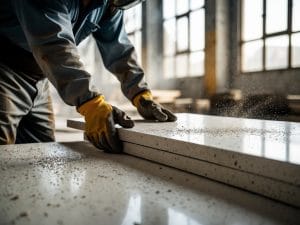
The Health and Safety Executive has issued prohibition notices against four companies found to lack adequate controls protecting workers from respirable crystalline silica dust.
Four businesses have been ordered to stop working with engineered stone after HSE inspectors found serious failures in the measures meant to keep workers safe from respirable crystalline silica — a dust that causes silicosis, a serious lung disease. The notices require each firm to halt work immediately and address the identified failures before resuming.
The failures weren’t confined to one area. Inspectors found problems with health surveillance, respiratory protective equipment, local exhaust ventilation, and machinery guarding across all four firms.
On dry cutting, the HSE’s position is blunt: it is unacceptable when working with engineered stone unless a business can show it has controls that are equally effective or better. That sits within existing guidance rather than new legislation — and four prohibition notices underlines that the regulator is enforcing those standards actively.
The inspection campaign was launched following concern about the risk of silicosis among workers in the sector. More than 1,000 visits are planned across the sector, running through 2026. Any Kent business fabricating or installing engineered stone — kitchen worktops being the most common setting — is within scope. If your ventilation, respiratory equipment or health surveillance arrangements haven’t been reviewed recently, now would be the time.
Key information
- Workers concerned about silica dust exposure at their workplace can contact the HSE on 0300 003 1747
- Employers in the engineered stone sector can find HSE’s guidance on RCS controls at gov.uk by searching “engineered stone silica”
- HSE’s nationwide inspection campaign continues through 2026 — businesses should review ventilation, respiratory equipment, and health surveillance arrangements now
HSE orders four firms to stop work with engineered stone after safety failures Quiz
5 questions