
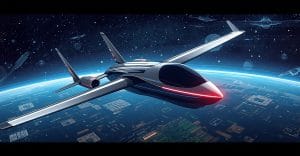
A converted Cessna Caravan fitted with Joby Aviation’s autonomy system flew coast to coast across America with no human pilot touching the controls at any point.
A modified Cessna Caravan has completed a 3,199-mile autonomous flight across the United States, from California to the Outer Banks of North Carolina, with a safety pilot onboard who made zero control inputs throughout the entire journey. Joby Aviation announced the milestone on 18 September 2026, describing it as the first fully autonomous cross-country flight in US history.
The aircraft — fitted with Joby’s autonomous flight system and sometimes referred to in coverage as the J208 — handled every phase of the trip itself. Taxi, take-off, cruise, weather rerouting, air traffic control interactions, and landing were all managed without a human hand on the controls.
A Safety Pilot Who Did Nothing — By Design
That last point is worth dwelling on. There was a real person sitting in the cockpit the whole time. But they didn’t fly the plane. The safety pilot was there to comply with current Federal Aviation Administration rules for experimental operations — not to steer.
Remote supervision teams watched from two locations: Joby’s Autonomy Headquarters in California and Shaw Air Force Base in South Carolina. At points during the journey, the aircraft was being monitored from as far as 2,323 miles away.
The route crossed multiple states and varied airspace environments, including congested areas around Phoenix, Arizona. The autonomous system handled rerouting around weather and busy corridors without human intervention, according to Joby’s account of the flight.
Built on Technology from a Start-Up Joby Bought
Joby didn’t build its autonomy stack from scratch. In 2024, the company acquired Xwing, a US autonomous aviation start-up, and integrated that software into fixed-wing aircraft platforms. The Cessna Caravan — a workhorse of regional cargo and passenger operations worldwide — was chosen as the test bed, suggesting Joby’s ambitions stretch well beyond its core electric air taxi business.
The flight ended near Kitty Hawk on the Outer Banks, the site where Orville and Wilbur Wright made the first powered flight in 1903. Whether that was deliberate symbolism or happy geography, Joby didn’t say. But the company clearly understood the resonance.
JoeBen Bevirt, Joby’s founder and chief executive, said: “This flight demonstrates that our autonomy system is ready to handle the complexity of real-world, long-distance operations — not just in controlled conditions, but across the full range of airspace environments the US has to offer.”
What the Industry Makes of It
Aviation analysts and technology reporters have characterised the flight as a demonstration of Joby’s broader commercial intentions. The Cessna Caravan platform is already used for cargo runs and regional connectivity across the world. An autonomous version could, in theory, be deployed for freight logistics, medical supply runs, or remote area services — not just urban air taxis.
But the gap between a technology milestone and a commercial service remains wide. The onboard safety pilot is a regulatory requirement, not a choice. Before routine autonomous flights carry passengers or cargo without a human present, the FAA will need to develop new certification standards, airspace integration rules, and clear frameworks around liability and remote supervision.
Pilot and safety communities have offered a mixed response to autonomous aviation advances. Some see automation as a way to reduce human error — still the leading cause of aviation accidents. Others raise questions about system reliability in edge cases, the risks of over-reliance on software, and what happens when something goes wrong with no trained pilot to intervene.
Those debates are far from settled.
The Bigger Picture for Autonomous Flight
Joby’s flight sits within a broader push to apply advanced artificial intelligence, sensor arrays, and automation to transport — the same wave driving driverless cars and delivery drones. The difference with aviation is that the consequences of failure are harder to contain, and public trust is harder to earn.
The UK’s Civil Aviation Authority is watching these developments. Britain has its own regulatory framework for autonomous and remotely piloted aircraft, and any commercial autonomous flight operation in UK airspace would need CAA approval before a wheel left the ground.
For now, this remains a US research and development story. But the direction of travel — if you’ll forgive the phrase — is clear.
What This Means for Kent Residents
Joby’s flight is a US milestone, not a UK service, and practical changes for people in Kent are some years away at best. But as autonomous aviation technology matures, it could eventually reshape cargo logistics and regional connectivity at airports within reach of the county, including Gatwick. NHS trusts and integrated care boards across England have already shown interest in using autonomous aircraft to move medical samples and supplies rapidly between sites — and demonstrations like Joby’s flight help build the safety case that UK regulators will need to see before approving similar operations here.
Source: @TechCrunch
Joby Aviation Completes First Fully Autonomous 3,199-Mile Flight Across the United States Quiz
5 questions