
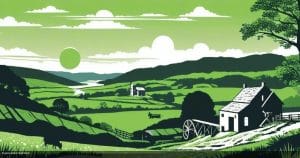
Maidstone Borough Council’s cabinet has recommended for adoption a draft Conservation Area Appraisal and Management Plan proposing an extension to the Loose Valley Conservation Area, adding fields along Old Loose Hill and Well Street and stretching south to the end of the valley — though the plan is not yet formally in force.
Cabinet has recommended the draft plan for adoption, and it must now pass through the council’s standard call-in process — a window during which elected members can request a decision be reviewed — before it takes effect. Until that process is complete, the proposed extension is not formally in force, and any stronger requirements for residents and landowners in and around Loose to consider the valley’s historic character before carrying out development or significant changes to their properties will not apply. Conservation-area status has covered much of the valley since it was first designated in 2000, and the proposed extension would add fields bordered by Old Loose Hill and Well Street, taking in the southern end of the valley as well. Under conservation area rules, any proposed changes must preserve or enhance the area’s special appearance.
The draft plan follows a public consultation. Loose Gardeners Society raised concerns about the original boundary, and the allotments were duly removed from the proposed extension.
Councillor Stephen Thompson, Cabinet Member for Healthier, Stronger Communities, said: “Loose Valley is special because it is much more than a collection of historic buildings. The stream, mills, cottages, trees, views and surrounding landscape all combine to tell the story of this part of Maidstone. Conservation area status doesn’t mean an area can’t change. It means that when change is proposed, we have stronger tools to make sure its historic character is properly considered and our heritage respected.”
The valley’s history runs deep. Its origins go back to the Roman period, when ragstone quarrying shaped the landscape. Medieval settlement grew up around Loose Stream, and buildings from that period survive today — among them Tylers, the Grade II listed Wool House, and Church House, which the council describes as an excellent example of a traditional Wealden Hall house. Old Mill House has medieval origins but was later converted into a mill.
Hayle Mill is the area’s most significant industrial survival. Dating from around 1800 and Grade II* listed, the former paper mill still retains its 1878 waterwheel, a timber-framed drying loft, and a full set of paper-making buildings: a vat house, rag-cutting loft, pulp stores and beater room. The conservation area also contains two further Grade II listed mills, historic houses and workers’ cottages associated with the milling industry.
The proposed Conservation Area Appraisal and Management Plan sets out what gives the valley its character — historic buildings, traditional materials, trees, archaeology, important views, Loose Stream itself, and the surrounding landscape. It also provides a framework for assessing future proposals against those qualities.
Key information
- Cabinet has recommended the draft Loose Valley Conservation Area Appraisal and Management Plan for adoption
- The decision is subject to the council’s call-in process before the plan is formally adopted
- The proposed extension adds fields bordered by Old Loose Hill and Well Street and the southern end of the valley
- The allotments were removed from the proposed extension after consultation
Loose Valley conservation area extension recommended to protect historic mills and landscape Quiz
5 questions