
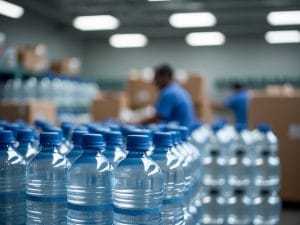
Councillors Jeffery and Harwood meet South East Water to address access problems at bottled water stations during recent Maidstone supply disruption.
Maidstone Borough Council has confirmed it’s pushing South East Water to overhaul its emergency water distribution after residents struggled to access bottled water stations during supply outages that hit the borough earlier this year.
The figures show thousands of customers across the Maidstone belt between Hollingbourne and Headcorn were affected during January’s regional water crisis, part of wider disruption that impacted tens of thousands across Kent and Sussex. But while bottled water stations were set up to help residents, many couldn’t reach them.
Councillors Jeffery and Harwood met with South East Water representatives to advocate for better emergency planning, according to the council’s official statement. The meeting focused on improving both the distribution of bottled water and broader community support during future incidents.
The Scale of the Problem
Data from South East Water shows the January 2026 disruption stemmed from a combination of burst mains, operational failures and severe weather impacts. Rural areas around Maidstone were particularly affected, with some households left without adequate water pressure for extended periods.
The council acknowledges that bottled water stations – typically set up in supermarket car parks and leisure centres – helped during the crisis. Yet the authority’s own assessment reveals “many struggled to access them”, highlighting gaps in the emergency response system.
This isn’t South East Water’s first major incident in the region. The 2025 Tunbridge Wells crisis saw around 24,000 homes lose supply after contamination at Pembury water treatment works. That incident prompted compensation payments equivalent to roughly two years of water bills for the worst-affected households.
Who Bears the Brunt
The access problems hit hardest among residents without private transport. Elderly people, disabled residents and low-income households in rural areas faced particular difficulties reaching bottled water stations, often needing to carry heavy containers over significant distances with limited public transport options.
Families with young children and people with medical conditions requiring reliable water supply – such as those using dialysis equipment – were also disproportionately affected by delays in accessing alternative supplies.
Around one in four adults in England has a limiting long-term illness or disability, suggesting significant potential demand for priority services during water outages. But the current system appears to struggle with reaching these vulnerable groups effectively.
The Council’s Case for Change
Maidstone Borough Council argues that better emergency distribution could reduce inequalities in access to water during outages. The authority wants more strategically located bottled water sites, targeted home deliveries for those who need them, and clearer communication channels.
Council representatives say joint working with South East Water could enhance community resilience by integrating council services, voluntary groups and water company resources. They argue that addressing access issues now – outside of an acute crisis – will support more solid plans before the next period of severe weather or infrastructure failure.
The council’s role here is significant but limited. While South East Water holds primary responsibility for supply resilience as the statutory water undertaker serving around 2.3 million people across its region, local authorities coordinate emergency response through frameworks like the Kent Resilience Forum.
Critics Question the Approach
But some residents and campaigners argue that improving bottled water logistics misses the point. They contend that reliance on emergency stations is evidence of systemic under-investment in water infrastructure, and that preventing outages should be the priority rather than managing their aftermath.
Critics also question whether council-water company meetings will produce concrete changes without stronger regulatory pressure from Ofwat or enforcement by the Drinking Water Inspectorate. Previous incidents have led to concerns about transparency, accountability and adequate compensation for customers left without water during repeated disruptions.
There’s frustration too that local authorities have limited power to compel water companies to act, leading some to view such meetings as more symbolic than transformational.
What Happens Next
The improvements being discussed include extending bottled water station coverage, improving opening hours, and enhancing direct delivery services for residents on priority services registers. Better communication through multiple channels – SMS, phone calls, letters and social media – is also on the agenda.
South East Water faces ongoing scrutiny over its emergency planning following the 2025 Tunbridge Wells incident and this year’s regional disruption. The company has previously used bottled water stations, tanker deliveries and network repairs as its primary response to outages affecting Maidstone and nearby districts.
Expert reviews suggest that while infrastructure resilience must improve, emergency distribution systems also need upgrading to protect public health. The council’s focus on emergency distribution appears to be a necessary part of a wider solution, even if not sufficient on its own.
Key Takeaways
- Maidstone Borough Council is pressing South East Water to improve emergency water distribution after access problems during January’s supply disruption
- Thousands of residents in the Hollingbourne to Headcorn area were affected, with many unable to reach bottled water stations
- The council wants better-located water stations, home deliveries for vulnerable residents, and clearer communication during future outages
What This Means for Maidstone Residents
Residents should consider signing up to South East Water’s Priority Services Register if they’re elderly, disabled, have young children or chronic health conditions that make them vulnerable during water outages. Keep an eye on both council and South East Water communication channels for updates on emergency planning improvements and future incident information. Local community groups and parish councils may also play a larger role in future emergency responses, so staying connected with neighbourhood networks could prove valuable during the next supply disruption.
Maidstone Borough Council presses South East Water to improve emergency bottled water distribution after supply outages Quiz
5 questions