
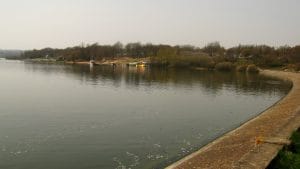
The Kent Downs Heritage Ponds project has recorded over 1,400 old water bodies with help from 55 volunteers, as funding from Defra and the National Lottery Heritage Fund backs large-scale restoration for protected species.
A Century of Loss
Around 75 per cent of Britain’s ponds have gone in the last hundred years. That’s roughly half a million water bodies — drained, filled in, or left to scrub over as mechanised farming made them pointless. About one in five of those that remain are now in poor ecological condition. Kent has felt that keenly, particularly across the chalk downs and farmed valleys where small ponds were once the backbone of livestock watering — not a nice-to-have, just how you kept animals alive through a dry summer.
Mapping What Was Lost
The Kent Downs Heritage Ponds project is working to reverse that, one pond at a time.
By early 2025, it had mapped more than 1,400 historic ponds across the Kent Downs National Landscape. Features including dew ponds — often seasonal, filling with rain and dew through the wetter months — and so-called “soles”, the more permanent water bodies that were once a fixture of downland farming. Around 55 volunteers from parishes across the Kent Downs helped locate and record these sites, building up a detailed picture of what this landscape once held and, frankly, what we’ve allowed to disappear.
The project draws funding from Defra’s Farming in Protected Landscapes programme and the National Lottery Heritage Fund. That combination ties pond restoration directly into national agri-environment policy — which means proper financial backing, not just goodwill.
Wildlife in the Balance
The mapped data is now being used to assess each pond’s condition and restoration potential, working alongside landowners. Two species in particular stand to benefit.
Great crested newts — a European protected species with a foothold in parts of Kent — favour larger, deeper ponds with decent water quality and surrounding cover. Restoring so-called “ghost ponds” that have silted up or vanished altogether could meaningfully expand the habitat available to them. And red-listed turtle doves, whose numbers have fallen sharply across the country, could gain from cleaner, more reliable water sources within the identified Turtle Dove Zones in the Kent Downs.
Kent Wildlife Trust has long argued that ponds are one of the most effective ways of bringing more wildlife into an area. Many across the county have been drained, choked with invasive species, or fouled by agricultural and road run-off. The goal here isn’t a pretty ornamental feature — it’s clean, functioning freshwater habitat. Which is a rather more unglamorous thing, but considerably more useful.
What Farmers and Landowners Get
For some landowners, a historic pond has always been an awkward corner of otherwise productive land. But with Defra and lottery funding now in play, many are coming round to restoration as part of wider agri-environment schemes. The benefits aren’t purely ecological, either. Healthier local biodiversity can improve natural pest control and pollination, and there’s a reputational side to it — farms with visible environmental commitments carry more weight with the public than they once did.
Technical guidance from UK pond specialists points to clean water, varied depths, and good surrounding habitat as the non-negotiables for any successful restoration. Where pollution levels are simply too high, starting fresh with a new pond in a cleaner location is often the smarter call.
—
Key Takeaways
- More than 1,400 historic ponds have been mapped in the Kent Downs National Landscape, with around 55 volunteers involved in the survey work
- Around 75 per cent of Britain’s ponds have been lost over the past century, with about one in five of those remaining now in poor condition
- Great crested newts and red-listed turtle doves are among the species expected to benefit from pond restoration across the Kent Downs
What This Means for Kent Residents
If you live in or near the Kent Downs, this project is quietly reshaping the landscape around you. Restored ponds can become outdoor learning sites, nature-watching spots, and tangible markers of local environmental improvement — the kind of thing you can actually point to. Volunteers remain central to the effort, so there are real opportunities for direct involvement in recording and surveying. And for anyone farming or managing land in a protected landscape, Defra’s Farming in Protected Landscapes programme is the funding route worth a serious look — it covers exactly this kind of habitat work.
More Than 1,400 Historic Ponds Mapped as Kent Drives Major Wildlife Restoration Push Quiz
5 questions