
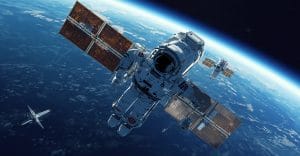
NASA’s Anil Menon and ESA’s Sophie Adenot spent over six hours outside the International Space Station removing a failed communications antenna, with a follow-up spacewalk scheduled to complete the installation.
The first task took 6 hours and 23 minutes. That’s how long NASA astronaut Anil Menon and ESA astronaut Sophie Adenot spent outside the International Space Station on 18 August 2026, removing a failed Space-to-Ground Antenna from the station’s Z1 truss segment — only to run out of time before they could fit the replacement. A second spacewalk, around 25 August, was then confirmed to finish the job.
It’s a detail that illustrates how complex this kind of work actually is. What looked on paper like a single planned outing of about six and a half hours turned into a two-part operation after the crew spent longer than expected disconnecting cables, loosening bolts, and securing hardware on the failed unit.
NASA confirmed that the ISS continues to operate with at least one fully functional Space-to-Ground Antenna, meaning there was no loss of contact with mission control in Houston. But the agency still wants redundancy restored — and that’s what the follow-up spacewalk is designed to deliver.
What the Antenna Actually Does
The Space-to-Ground Antenna, mounted on the Z1 truss, is the hardware that routes high-speed data and voice communications between the station and Earth via NASA’s Tracking and Data Relay Satellite System. That network of satellites acts as a relay, bouncing signals between the ISS and ground stations — including NASA’s Mission Control Center in Houston — almost continuously as the station orbits at around 400 kilometres altitude.
Without reliable high-speed links, the ability to monitor crew health, run experiments in real time, and maintain situational awareness of station systems would be seriously degraded. So keeping these antennas operational isn’t optional.
The antenna assembly involved reportedly weighs around 90 kilograms, though that figure comes from news reports summarising NASA technical briefings rather than formally published documentation, and should be treated with some caution.
Two Spacewalks, One Repair
The sequence began with the 18 August outing — designated US Spacewalk 97 in media and NASA briefing coverage, though that specific numbering hasn’t been independently cross-checked against NASA’s full EVA log. Menon and Adenot exited through the Quest airlock and made their way to the Z1 truss, where they successfully detached the failed antenna. But with time running short, they secured the old unit to the truss structure and left the spare antenna on an external stowage platform rather than rush the installation.
That’s the kind of call that mission controllers make when precision matters more than speed.
For the follow-up spacewalk, the plan called for Menon to ride the Canadarm2 — the station’s robotic arm — to retrieve the spare antenna from its storage position, while Adenot released it from the external platform before the pair worked together to mount it on the Z1 truss and complete the electrical and data connections.
NASA streamed both spacewalks live, with running technical commentary explaining tools, procedures, and safety measures — the agency’s standard approach for US segment EVAs.
A Milestone for European Spaceflight
Sophie Adenot’s participation drew attention beyond the technical details of the repair. Her spacewalks mark one of the first times a French woman astronaut has conducted an EVA, a fact noted in ESA’s own coverage of the mission and picked up by international media.
Adenot is part of ESA’s 2022 astronaut class and is serving aboard the ISS as part of the agency’s ongoing partnership with NASA. ESA’s involvement connects to broader UK-funded ESA programmes managed through the UK Space Agency, which contributes to the agency’s budget and participates in its scientific and human spaceflight activities.
The ISS has been continuously inhabited for more than 25 years, and maintenance work of this kind — replacing ageing or failed external hardware — is a regular feature of keeping the platform operational. Critics of human spaceflight have long questioned whether such repairs could be more efficiently handled by robotics, or whether continued investment in an ageing station is the best use of space budgets as attention shifts to commercial stations and missions to the Moon and Mars. NASA and ESA’s position is that the ISS remains a working science platform and that maintaining its communications infrastructure is essential to the research it supports.
Neither agency has suggested the antenna failure posed any risk to the crew or to the station’s operations.
What This Means for Kent Residents
Researchers at the University of Kent who work with ISS experiment data rely indirectly on the station’s communications infrastructure, so maintaining high-speed links supports the reliability of that data pipeline. More broadly, UK taxpayers — including those in Kent — contribute to ESA’s human spaceflight programme through the UK Space Agency, making missions like this one partly British-funded. Schools and colleges in Kent that use NASA and ESA live feeds for science education also benefit when the station’s communications systems are kept in good working order.
Source: @NASA
NASA and ESA Astronauts Replace International Space Station High-Speed Communications Antenna in Six-Hour Spacewalk Quiz
5 questions