
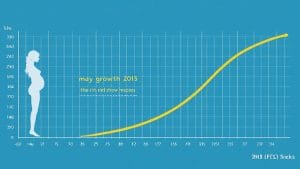
Research published in the BMJ suggests that standard growth charts used across the NHS to monitor unborn babies are misclassifying some infants as too small or too large — potentially putting lives at risk.
When One Size Doesn’t Fit All
For any parent-to-be, those routine antenatal appointments carry real weight. The scans, the measurements, the careful checks — all of it is meant to offer reassurance that the baby is growing as it should. But new research is raising questions about whether the tools midwives and doctors rely on to make those assessments are as reliable as we’d hoped.
A study highlighted by the BMJ has found that the standard fetal growth charts currently used across the NHS — designed to apply to all pregnancies regardless of the mother’s individual characteristics — are regularly misclassifying babies. Some infants are being flagged as too small when they’re not. Others, growing at a rate that should trigger concern, are being missed entirely.
That matters enormously. A baby classified as too large might face unnecessary medical interventions — early induction, additional monitoring, or procedures that carry their own risks. But the more sobering finding is on the other side: babies who are genuinely at risk of stillbirth may be going undetected because the chart says they fall within a normal range.
What These Charts Actually Do
Fetal growth charts — sometimes called centile charts — plot a baby’s estimated size against what would be considered typical for a given number of weeks of pregnancy. Midwives use measurements taken during ultrasound scans to check whether a baby’s growth is tracking along expected lines. If a baby falls below a certain threshold, it can trigger closer monitoring or earlier delivery.
The problem, according to the research, is that a single standardised chart cannot account for the natural variation between different women and different pregnancies. Factors like the mother’s height, weight, ethnicity, and whether it’s a first pregnancy can all influence what a healthy growth pattern actually looks like for that individual baby. A chart built on population-wide averages will, by definition, get it wrong for a proportion of pregnancies.
The Stillbirth Risk That Can’t Be Ignored
Stillbirth remains one of the most devastating outcomes in maternity care. The UK’s stillbirth rate has fallen over recent decades, but campaigners and clinicians have long argued there is still more to do.
The BMJ study’s findings feed directly into that conversation. If growth chart misclassification means some high-risk babies aren’t being identified and given closer antenatal care, that represents a gap in the safety net that the NHS needs to address.
It’s worth being clear about what this research doesn’t say. It doesn’t suggest that midwives or doctors are doing anything wrong — they are working with the tools and guidelines they’ve been given. The question the study raises is whether those tools are fit for purpose.
What Might Change
Customised growth charts — which adjust expected growth ranges based on individual maternal factors — have been discussed in maternity research circles for some time. Some NHS trusts have piloted more tailored approaches, though a consistent national standard has not yet been adopted.
The BMJ’s coverage of this study adds fresh momentum to calls for the NHS to review its approach. Whether that leads to updated national guidance will depend on further review by NHS England and the relevant clinical bodies.
No spokesperson from NHS Kent and Medway Integrated Care Board had commented publicly on the findings at the time of publication.
Antenatal Care Closer to Home
Here in Kent, antenatal services are provided across several sites including Maidstone and Tunbridge Wells NHS Trust, Dartford and Gravesham NHS Trust, and East Kent Hospitals University NHS Foundation Trust. Thousands of pregnancies are monitored through these services every year.
If you have questions about your own antenatal care or anything raised by this research, the right first step is to speak to your midwife or GP — not to draw conclusions from a single study. They can explain how your baby’s growth is being monitored and what measurements mean in your specific case.
—
Source: @bmj_latest
Key Takeaways
- Standard NHS fetal growth charts apply the same measurements to all pregnancies, without accounting for individual maternal characteristics such as height, weight, or ethnicity
- The BMJ-highlighted study found these charts frequently misclassify babies as too small or too large, which can lead to unnecessary interventions or — more seriously — missed cases where a baby is genuinely at risk
- The research adds to existing calls for the NHS to consider more customised approaches to fetal growth monitoring, though no policy changes have been announced
What This Means for Kent Residents
If you’re currently pregnant and being monitored at one of Kent’s maternity units — whether that’s in Maidstone, Margate, Medway, or anywhere else across the county — this research is worth being aware of, but it shouldn’t cause alarm. Speak to your midwife if you have concerns about how your baby’s growth is being assessed; they are best placed to explain what the measurements mean for your individual pregnancy. For general health queries, NHS 111 is available around the clock, and in any emergency during pregnancy, call 999 without hesitation.
NHS Fetal Growth Charts May Be Missing At-Risk Babies, Study Finds Quiz
5 questions