
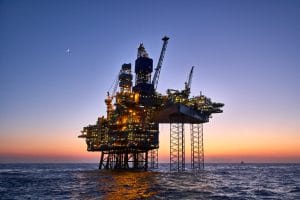
UK North Sea output is 75% below its 1999 peak. In the first of two parts, Kent Local News sets out what has closed, what is left, what the oil companies say, why Norway’s side of the same sea is still producing strongly, and whether the official figures can be trusted.
Most of the liquefied gas Britain imported last year was shipped from the United States, and one of the places it comes ashore is the Isle of Grain terminal on the Medway. As the country’s own North Sea fields run down, more of the gas that heats Kent homes and fires the three power stations on the Hoo peninsula has to be bought from abroad.
Diesel averaged 199.3p a litre in the week of 19 October, 40% more than a year earlier. Politicians from Donald Trump to Kent’s own MPs say part of the answer lies offshore: get the North Sea producing again.
This two-part investigation asks whether that can be done, relying on the official record rather than forecasters. Part 1 looks at the oil and gas itself: how much has already been produced and shut down, what is left, what the oil companies say, why Norway’s side of the sea is still producing strongly, and whether the official figures can be trusted. Part 2, on Tuesday 27 October, the eve of the Budget, looks at who pays: tax, bills, the climate argument and what it all means for Kent.
What has already gone
UK offshore production peaked in 1999 at about 4.5 million barrels of oil equivalent a day, according to the North Sea Transition Authority (NSTA), the industry regulator. In 2025 it was about 1.1 million. The Department for Energy Security and Net Zero (DESNZ) puts output 75% below the 1999 peak and says 2025 production was “the lowest level since 1976”.
By the end of 2024, 47.7 billion barrels of oil equivalent had been produced from UK waters. The NSTA’s latest count of proven and probable reserves, the oil and gas in fields that are producing or approved, was 2.9 billion barrels, down 0.4 billion in a single year. At the 2024 rate of production, about 401 million barrels, that is roughly seven years’ worth.
The regulator’s field database, updated on 12 October, lists 478 offshore fields. Of these, 248 have stopped producing, 212 are still producing and nine are suspended. The NSTA expects a further 173 assets to stop producing between 2026 and 2031, and estimates the cost of decommissioning what remains at £43.4 billion. HM Revenue and Customs estimates that £11.7 billion of that will fall on the taxpayer through tax relief. Spending on decommissioning reached a record £2.6 billion in 2025, with about 3,000 wells still to be permanently plugged.
Can the closed fields be switched back on?
Some wells can. The NSTA identified about 200 wells that had been shut in, and more than 50 are back online. It says reinstated wells produced 16 million barrels of oil equivalent in 2025, which is useful but a small fraction of the roughly 400 million produced in a year.
A field whose platform and wells have been removed is a different matter. Restarting it means a new development, and new developments take time. The NSTA has put the average gap between a discovery and first production at close to five years. The government says it “typically takes up to 10 years for the award of a licence to lead to production”.
There is a pipeline of new work. The NSTA says 14 projects, with £10 billion of investment and 800 million barrels, are being steered towards consent decisions. The two largest, Rosebank west of Shetland and Jackdaw in the central North Sea, had their consents quashed by the courts in January 2025 and reapplied. On 21 October the Energy Secretary, Miatta Fahnbulleh, approved Jackdaw, and the NSTA granted consent for gas to be produced there. The Minister for Energy, Michael Shanks, told the Commons that because the developer had been allowed to carry on building at its own risk, the field would start to supply gas “by as soon as the end of this month”, and that the gas coming ashore would be “about 5% of our production—6% at the peak”. Rosebank, he said, is “a separate consenting decision”, to be made “in due course”. In their own submission, Rosebank’s developers say it would produce about 73,000 barrels of oil equivalent a day at peak. Rosebank’s operator is Equinor, the company majority-owned by the Norwegian state, which says in the same submission that it is the largest supplier of energy to Britain.
How much is left
The NSTA’s February 2026 projection has UK output falling from about 1 million barrels a day this year to 650,000 in 2030, 370,000 in 2035 and under 80,000 by 2050. It projects 3.3 billion barrels in total between 2026 and 2050, assuming oil declines by 9% and gas by 13% a year beyond the next five years. The Climate Change Committee, using the NSTA’s figures, describes “a further decline in combined oil and gas production of 93.2% by 2050”.
The industry thinks more is possible. A 2025 study by Westwood Global Energy, commissioned by the trade body Offshore Energies UK (OEUK), found that “up to 7.5 billion barrels of oil and gas could still be produced from UK waters – 3.2 billion more than current government estimates”, if tax and licensing policy changed.
Neither figure supports a return to full production. At the 1999 rate of 4.5 million barrels a day, the 2.9 billion barrels of proven and probable reserves would last less than two years, and the industry’s best case of 7.5 billion would last under five. That is arithmetic, not a plan, but it shows the scale: the argument now is about how much of a much smaller remaining resource is recovered, not about turning the clock back.
How do they know what is left?
If no new areas are licensed for exploration, how can anyone know what is still out there? Partly, they cannot. The NSTA’s estimates of oil and gas yet to be found come from seismic surveys and geological models, not drilling. It puts the resources in mapped prospects at 4.6 billion barrels, after allowing for the risk that many will prove dry, and estimates a further 11.2 billion in wider geological “plays” not yet mapped into prospects. Only a well shows whether a prospect actually holds oil or gas.
The regulator says its estimate of mapped prospects rose by 31% in 2024 because of “the additional prospective resources from the 33rd Licensing round”, the last round held. The last time new areas were offered, in other words, the estimate of what might be found went up. The NSTA also counts 2.0 billion barrels in known discoveries that sit outside any current licence.
Exploration drilling has fallen sharply. The NSTA reported that exploration and appraisal wells dropped “from over 40 in 2011 to under 10 in 2021”, which it put down mainly to the limited capital available for exploration. In 2024, it says, “the limited exploration drilling of four wells discovered less than 100mmboe”. Holders of existing licences can still explore within them; the ban applies to new licences for new areas. But the government’s view that new licences would make only a “marginal” difference rests on estimates that, without drilling, cannot be tested.
What the oil companies say
When new areas were last offered, companies wanted them. The 33rd licensing round, launched in October 2022, drew 115 applications from 76 companies, the most since 2016-17, and the NSTA went on to offer 82 licences to 50 companies, including Shell, Equinor, bp and TotalEnergies.
Since then, the companies’ own statements point to tax and costs at least as much as to licences. Apache, which operates the Forties and Beryl fields, says in its latest US annual report that, given “significant tax levies and modernization of aging infrastructure”, the expected returns do not support further investment and “it will cease production at its facilities in the North Sea prior to 2030”. Harbour Energy, one of the largest UK producers, has cut its UK spending. Its chief executive, Linda Cook, told investors on 6 August: “The existing fiscal environment here in the UK means that projects, investments in the UK just struggle to compete with international opportunities.” On the same call Harbour said it had been “awarded nine new licences in the recent licensing round” in Norway.
Others are still investing, mostly close to existing platforms. Serica Energy, which says its assets deliver more than 10% of UK gas production, told investors in June that it was tendering for a rig for a multi-well programme and plans an exploration well at its Skerryvore prospect, “close to existing infrastructure”, in 2027. Larger players have merged their UK businesses: Shell and Equinor formed Adura, and TotalEnergies has agreed to combine its UK operations with NEO. The industry’s case, set out in OEUK’s “Policy versus geology” report, is that better terms would slow the decline, not reverse it.
Trump, Norway and “the exact same basin”
President Trump has pressed the point repeatedly. On 14 April he posted on Truth Social: “Europe is desperate for Energy, and yet the United Kingdom refuses to open North Sea Oil, one of the greatest fields in the World.” In the same post he wrote: “Norway sells its North Sea Oil to the U.K. at double the price.” On 19 July, as Andy Burnham was about to become Prime Minister, he went further, writing that Mr Burnham “has stated that he will be opening up, all the way, the invaluable North Sea Oil!” and that the North Sea “is one of the Greatest Sources of quality Oil on Earth, has hundreds of years of Capacity left, with much not even found yet”. In May 2025 he had written of “A century of drilling left, with Aberdeen as the hub.”
The official record does not bear those claims out. The NSTA’s projection, set out above, is for 3.3 billion barrels in total between 2026 and 2050, with output under 80,000 barrels a day by 2050, and even the industry’s best case would last under five years at the 1999 rate. In the Commons since taking office, Mr Burnham has spoken of a “pragmatic approach” to oil and gas, and his government has not changed the licensing policy. And North Sea crude from both countries is sold against the same benchmark: Dated Brent, published by S&P Global Platts, is assessed from UK grades, Brent and Forties, and Norwegian grades, Oseberg, Ekofisk and Troll, alongside US WTI Midland. Kent Local News found no evidence that Norway charges the UK double.
At Westminster the comparison is with Norway. Claire Coutinho, then the Conservatives’ energy spokeswoman, told the Commons on 24 March: “We are paying tens of billions of pounds to import oil and gas from Norway from the exact same basin we could be drilling ourselves.” Sir Roger Gale, Conservative MP for Herne Bay and Sandwich, told MPs on 19 May: “It is absolute nonsense to buy in fuel from Norway or elsewhere, when we could be producing it from the same sources ourselves.”
It is the same sea, but not the same fields. A 1965 treaty divided the seabed between the UK and Norway along a median line, and each country produces from its own side. The handful of fields that straddle the line are shared by treaty: Frigg in 1976 was the first such agreement anywhere, and Statfjord was initially split roughly 89% to Norway and 11% to the UK because most of the field lies on Norway’s side.
Norway’s own record also shows decline. Its regulator says Norwegian oil production peaked in 2001 at 3.4 million barrels a day and then fell by about 5% a year until 2011. In August 2026 it averaged about 2.07 million barrels a day of oil and other liquids. Its oil output in 2025 was the highest since 2009, and a single field explains much of that: Johan Sverdrup, discovered in 2010 and producing since October 2019, now supplies about a third of Norway’s oil. Norway also kept licensing, and made 21 discoveries in 2025, 11 of them in the North Sea.
Norway’s regulator puts its remaining reserves at 815 million cubic metres of oil and 1,219 billion cubic metres of gas. By Kent Local News’ conversion that is about 12.8 billion barrels of oil equivalent, roughly four times the UK figure, although Norway’s total also includes the Norwegian and Barents Seas outside the North Sea.
Trade runs both ways. In 2025 Norway supplied 69% of the UK’s gas imports, equal to 40% of all the gas the UK used, almost all of it by pipeline. For crude oil, the United States (30%) and Norway (27%) were the largest sources of UK imports. At the same time, nearly 90% of the crude oil the UK produced in 2024 was exported, mainly to the Netherlands, according to the government’s security of supply report. North Sea oil is sold on the world market to whichever refinery pays most; it is not a national stockpile.
Is the data being bent to fit the policy?
Some readers suspect the official figures have been shaped to justify winding the industry down. It is a fair question to put to the record, and four tests can be applied.
First, the decline began in 1999, more than 20 years before the windfall tax of 2022 or Labour’s 2024 pledge on licences, and it continued under Labour, coalition and Conservative governments that all supported drilling. Second, from 2015 the law pointed the other way: the Infrastructure Act 2015 wrote “maximising the economic recovery of UK petroleum” into the Petroleum Act as the principal objective, and the Oil and Gas Authority, now the NSTA, was created to deliver it. Production kept falling. Third, the industry’s own commissioned study, which argues for more drilling, puts the best case at 7.5 billion barrels, a sixth of what has already been produced. Fourth, Norway’s regulator, under a government that has kept licensing, records the same pattern of an early-2000s peak followed by decline, softened by a late giant discovery that the UK side did not have.
On that evidence the figures are not invented. What is genuinely in dispute is a policy question: whether Britain should try to recover the extra 3 billion or so barrels that the industry says better tax and licensing terms could unlock.
In Part 2, on Tuesday 27 October, Kent Local News looks at that choice: the government’s reasons for refusing new licences and its critics’ case, how emissions are counted, what the North Sea is worth to the Treasury, whether more drilling would cut bills, and what it all means for Kent households.
North Sea oil Part 1: how much do you know?
5 questions
Sources
- North Sea Transition Authority — Production and expenditure projections, February 2026
- North Sea Transition Authority — Overview 2026
- North Sea Transition Authority — UK Oil and Gas Reserves and Resources as at end 2024
- North Sea Transition Authority — Offshore hydrocarbon fields open data (12 October 2026)
- North Sea Transition Authority — Decommissioning Cost and Performance Update 2026
- NSTA / HMRC — Remaining Exchequer cost of decommissioning, February 2026
- North Sea Transition Authority — Wells Insight Report 2022
- North Sea Transition Authority — 33rd licensing round announcement (discovery-to-production lead time)
- North Sea Transition Authority — 33rd Round attracts 115 bids
- North Sea Transition Authority — Final set of 33rd Round awards
- DESNZ — UK Energy in Brief 2026
- DESNZ — Digest of UK Energy Statistics 2026
- DESNZ — Statutory security of supply report 2025
- DESNZ — Energy Trends table 4.3, gas imports and exports (September 2026)
- HM Government — North Sea Future Plan: government response, November 2025
- legislation.gov.uk — Petroleum Act 1998, section 9A
- Climate Change Committee — Progress in reducing emissions, 2026 report to Parliament
- Donald J. Trump — Truth Social post, 14 April 2026
- Donald J. Trump — Truth Social post, 19 July 2026
- Donald J. Trump — Truth Social post, 23 May 2025
- S&P Global Platts — Dated Brent price assessment explained
- Hansard — Prime Minister’s Questions, 9 September 2026
- Norwegian Offshore Directorate — Resource accounts as at 31 December 2025
- Norwegian Offshore Directorate — Johan Sverdrup field factpage
- Norwegian Petroleum Museum — The UK-Norwegian boundary treaty
- Norwegian Petroleum Museum — Statfjord agreements
- Hansard — Oil and Gas, House of Commons, 24 March 2026
- Hansard — Energy Security, House of Commons, 19 May 2026
- Hansard — Jackdaw Gasfield, House of Commons, 21 October 2026
- DESNZ — Jackdaw gas field gets green light, 21 October 2026
- North Sea Transition Authority — NSTA grants consent for Jackdaw, 21 October 2026
- Offshore Energies UK (industry body) — Policy versus geology report
- Rosebank developers’ submission to the Secretary of State, September 2025
- APA Corporation — Annual report (Form 10-K) for 2024
- Harbour Energy — 2026 half-year results call transcript, 6 August 2026
- Serica Energy — Capital Markets Day presentation, 2 June 2026
- Shell — Shell and Equinor complete formation of Adura
- DESNZ — Weekly road fuel prices