
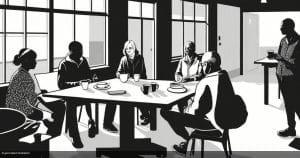
A resident-led board in Maidstone will co-produce a ten-year plan deciding how up to £20 million of government funding is spent across Park Wood, Senacre and surrounding areas.
Households in Park Wood and Senacre could see investment in everything from housing conditions and community buildings to employment support and public spaces — but no specific projects have been confirmed yet. Maidstone Borough Council announced that the area has been selected for the UK Government’s Pride in Place programme, which provides up to £20 million of funding and support to disadvantaged neighbourhoods over a decade. A Neighbourhood Board — a group drawn from local residents, community organisations, businesses, faith groups, the local MP and a ward councillor — will be responsible for shaping how that money is used.
The council posted the announcement on its social media channels, saying the board will “help shape how funding is used over the next ten years.” Park Wood and Senacre is one of 261 neighbourhoods identified under the programme’s Phase 2 methodology, and sits among 40 new communities added when the government expanded the scheme in February 2026.
How the money works
The £20 million headline figure covers the full ten years and includes both cash grants and other forms of support — so the annual amount available is likely to be substantially lower than it sounds. Funding is split 75% capital (money for buildings, infrastructure and physical improvements) and 25% revenue (money for running costs, services and activities). It arrives in three phases:
- 2026–27 to 2029–30 — first investment period
- 2030–31 to 2032–33 — second investment period
- 2033–34 to 2035–36 — third investment period
Government rules require the board to spend at least 25% of its cumulative allocation during the first period and at least 50% by the end of the second. No specific annual figure for Park Wood and Senacre has been independently verified.
What the board is — and what it isn’t
The board must have at least eight members and is expected to represent a broad range of local voices before any projects are selected. According to government delivery guidance, the board must demonstrate that its ten-year plan has been shaped by local people before delivery begins. Membership details, governance arrangements and meeting minutes are expected to be published so residents can follow the process.
But a board of eight or more people cannot automatically speak for every household in the area. Its legitimacy will depend on how diverse its membership turns out to be, how openly it runs its meetings, and whether the engagement events that feed into the plan reach residents who don’t usually show up to these things — including tenants, young people, older residents and disabled people.
The case for and against
Supporters of the model point to the ten-year commitment as a genuine advantage over short-term grants, which rarely give communities enough time to tackle deep-rooted problems. A longer planning horizon means larger projects — a rebuilt community centre, say, or a sustained employment programme — become possible in a way they simply aren’t with one-off funding rounds.
The sceptical case is straightforward. No specific project, completion date or individual spending commitment has been confirmed for Park Wood or Senacre. The capital-versus-revenue split may also constrain what residents can actually ask for: if a community wants more activities or support workers rather than bricks and mortar, only a quarter of the pot is available for that. And expressions of interest for board membership were reported as closed by August 2026, meaning the window for residents to put themselves forward may already have passed.
What happens next
The board will now begin community engagement before finalising the ten-year plan. Residents can monitor the council’s Pride in Place engagement platform for published membership details, meeting dates and minutes as they become available.
Key information
- Board membership details and governance arrangements are expected to be published on Maidstone Borough Council’s Pride in Place engagement platform — check there for meeting dates and minutes
- Expressions of interest for board membership were reported as closed by August 2026; contact Maidstone Borough Council directly to confirm whether any further opportunities exist
- No specific projects or spending commitments have been confirmed; residents should treat the £20 million as a maximum figure spread across ten years, not an immediate payment
Park Wood and Senacre residents to help shape £20 million neighbourhood investment Quiz
5 questions