
Correction — 4 November 2026: An earlier version of this article included a quote attributed to Ben Lamm of Colossal Biosciences. We could not find a source for the quote, so it has been removed. The correction is recorded on our Corrections page.
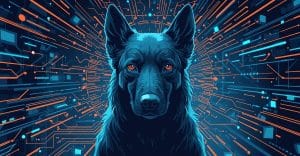
A US defence start-up founded by two of tech’s more unconventional figures wants to breed genetically engineered dogs for military and law-enforcement work — and it’s reportedly raised around £150 million to do it.
Warhound emerged from stealth in October 2026, pitching itself as a company that will combine animal biotechnology with defence hardware to produce healthier, more capable working dogs for demanding operational roles. The company was co-founded by Ben Lamm, chief executive of the de-extinction firm Colossal Biosciences, and Palmer Luckey, who co-founded the defence technology company Anduril Industries and is best known to many as the creator of the Oculus virtual-reality headset.
There’s just one catch: the dogs don’t exist yet.
What Warhound Is Actually Proposing
The company’s plan, as reported by TechCrunch and Engadget, is to collect cell lines from high-performing working dogs and store them in a biobank. Those lines would then be used as the basis for genetic modification and cloning, with the first genetically engineered animals reportedly targeted for birth in early 2027.
Breeds in focus include the Belgian Malinois, German Shepherd and Labrador Retriever — three breeds already common in military and police work around the world. The proposed genetic changes aren’t about creating something out of a science-fiction film. Rather, Warhound says it wants to address known inherited health problems in working-dog lines: hip dysplasia, certain cancers and poor eyesight are all mentioned. The aim is also to seek traits like speed, agility and improved scent detection — qualities that already make dogs useful in roles that are either too dangerous for people or too difficult for machines to handle reliably.
Proposed operational roles include explosives detection and search operations.
Two Companies, One Start-Up
The structure of Warhound draws on the expertise of both its founders’ existing businesses. Colossal Biosciences — which has previously announced projects involving woolly mammoths, thylacines and dire wolves — should contribute the genetic engineering, cloning and animal-biology knowledge. Anduril, meanwhile, should supply software systems, protective equipment and handler-support technology to work alongside the dogs in the field.
The reported $200 million in funding — around £150 million — is a sizeable sum for a company whose core product hasn’t yet been born. The specific investment participants and ownership arrangements haven’t been fully confirmed through company filings, so that figure should be treated with some caution until further disclosure is made.
The Technology Hasn’t Been Tested Operationally
It’s worth being clear about where this project actually stands. Warhound has no operational dogs. The genetic modifications haven’t been applied to any animal in a verified, publicly confirmed way. The performance, welfare outcomes and safety of the proposed dogs remain entirely untested in real conditions.
The company presents its work as supplementing existing working-dog programmes rather than replacing them outright. But that framing doesn’t resolve the harder questions the project raises.
Questions About Welfare and Oversight
Animal-welfare concerns are an obvious flashpoint here. Genetic modification and cloning of animals for military and law-enforcement use raises questions that go well beyond the science. Critics are likely to ask about the welfare risks during development, the ethics of engineering animals specifically for dangerous work, and what accountability frameworks would govern how these dogs are deployed and treated.
There are also broader questions about oversight. Who decides whether a genetically engineered dog is fit for operational duty? What standards apply? And if something goes wrong — whether that’s a welfare failure or an operational one — who is responsible?
None of those questions have public answers yet. The project is at an early development stage, and the gap between a funding announcement and a verified, operationally capable animal is considerable.
Warhound’s intended market is the US military, US law enforcement and US emergency responders. No UK deployment, UK government contract or British Army involvement has been verified. Any future use in the United Kingdom would require separate procurement decisions and regulatory approval under UK law covering animal welfare, genetic modification, cloning and research — a process that would be entirely independent of whatever approvals Warhound pursues in the United States.
What This Means for Kent Residents
There is no verified link between Warhound and any organisation in Kent. Kent Police runs its own conventional police-dog programme, but no connection to this project has been established. For UK consumers and citizens more broadly, the story is one to watch rather than one that affects daily life right now — if gene-edited working dogs ever make their way into UK law enforcement or emergency services, they would face a lengthy and separate regulatory journey through British institutions before anything like deployment could happen.
Source: @TechCrunch
Warhound Plans Gene-Edited Military Dogs With Anduril Technology and £150m Backing Quiz
5 questions