
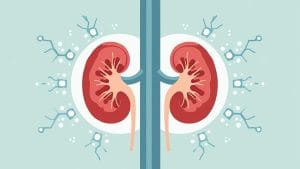
A treatment that blocks two proteins linked to immune-driven kidney damage has outperformed placebo in a large phase 3 trial, according to results published by the New England Journal of Medicine.
The drug, povetacicept, targets a condition called IgA nephropathy — a kidney disease in which the immune system mistakenly attacks the kidneys’ filtering units, causing them to leak protein into the urine. That protein leakage, known medically as proteinuria, is a key sign of worsening kidney function. Participants who received povetacicept showed a markedly greater reduction in proteinuria than those who received a dummy treatment, according to the journal.
Povetacicept works by blocking two proteins — B-cell activating factor (BAFF) and a proliferation-inducing ligand (APRIL) — that drive the abnormal immune response behind the disease. Targeting both at once, rather than one alone, is the approach being tested in this trial, known as RAINIER AIS-D08.
IgA nephropathy is one of the most common causes of kidney failure worldwide. There’s no cure, and existing treatments focus on slowing damage rather than stopping it. A drug that measurably reduces proteinuria in a phase 3 trial — the final stage before regulators consider approval — is a development the nephrology community will watch closely.
An interim analysis of the trial has been published by the New England Journal of Medicine. Regulatory review would be a separate process before any drug becomes available to NHS patients.
Anyone concerned about kidney health, unexplained swelling, or changes in urine should contact their GP in the first instance, or call NHS 111 for advice.
Source: @NEJM