
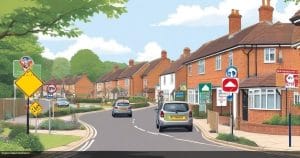
Sevenoaks District Council is asking residents to comment on a new Local Plan that would see around 17,460 homes built across the district between 2027 and 2042 — a 63% increase on the previous housing target.
Residents across Sevenoaks District could see thousands of new homes built near their streets, fields and villages over the next 15 years if the council’s draft Local Plan goes ahead as proposed. The plan — which covers everything from where houses can be built to where new employment land and infrastructure should go — is now open for public comment before it is sent to the Planning Inspectorate for independent examination.
Sevenoaks District Council posted about the consultation on social media, directing residents to the plan documents and urging people to share their views.
The Government’s new housing target requires Sevenoaks to deliver about 1,145 to 1,164 homes per year — up from a lower figure that the council’s previous Local Plan, rejected at examination in 2020, failed to meet. The council says a sound, adopted plan is the best way to retain local control over where development goes. Without one, developers can apply to build almost anywhere and win on appeal.
The biggest proposed sites
More than 500 sites were submitted by landowners and developers for consideration. The largest single allocation is Pedham Place, a golf course near Swanley and Farningham, put forward for around 2,500 to 2,600 homes plus employment land. It sits close to the Kent Downs Area of Outstanding Natural Beauty. Other major proposals include a new settlement at Broke Hill, a former golf course near Halstead and Knockholt, at around 810 homes; a site on the northern edge of Sevenoaks town — east of London Road and west of Otford Road — at about 1,500 homes; and several sites around Edenbridge totalling more than 2,100 homes.
Smaller but still significant allocations include land south of Redhill Road at New Ash Green and Hartley at around 580 homes, and sites in Swanley, Hextable, South Darenth and Horton Kirby. In South Darenth, the plan identifies agricultural land between Heathside and Skinny Lane for up to 230 homes and an expansion of Southdowns Retirement Village for 69 homes. The plan also includes policies for affordable housing, specialist accommodation such as retirement homes, and new infrastructure — roads, schools, health facilities and community spaces — tied to the growth.
Green Belt and the arguments against
A large share of the proposed development sits on currently designated Green Belt land. That is the sharpest point of contention. Opposition groups and many residents argue the scale of growth — roughly 17,000 homes across 15 years — will overload existing roads and services, erode the countryside and change the character of smaller communities for ever.
Specific sites draw organised campaigns. Pedham Place and Broke Hill attract objections on grounds of traffic, environmental damage and the risk of different settlements merging into one another. Around Edenbridge, critics warn that clustering several large allocations near a market town could effectively turn it into something unrecognisable. Some parish and town councils, including those for Edenbridge, Horton Kirby and South Darenth, and Hartley, accept that some growth is inevitable but are pushing for changes to individual sites, densities or infrastructure commitments.
There are also doubts about affordability. Critics question whether the homes built will genuinely be within reach of local people on average incomes, or whether they will simply add to the district’s already expensive market.
The council’s case for the plan
According to the council’s consultation materials, meeting the full Government target strengthens the plan’s chances of passing examination and reduces the risk of unplanned, speculative development getting through on appeal — the outcome that followed the 2020 rejection. The council argues that concentrating growth on identified sites allows infrastructure to be planned and funded through developer contributions, rather than arriving piecemeal.
Concentrating some development on previously developed or “grey belt” land — such as former golf courses — is presented as a less damaging option than building on untouched open countryside. And the plan’s affordable housing policies, the council says, are designed to help younger people, families and older residents who currently struggle with high local house prices.
Who gets a say — and how
This is a Regulation 19 consultation — the formal stage at which the proposed submission version of the plan is published for representations before going to the Planning Inspectorate. Comments submitted now will be considered by an independent inspector. Residents, businesses, parish and town councils and community groups can all take part. Failing to comment at this stage may limit the opportunity to raise concerns later during the examination process.
The plan, if adopted, will set the rules for development across Sevenoaks District from 2027 to 2042.
Key information
- What to do: Review the Local Plan documents and submit your representation through the Sevenoaks District Council consultation portal — details in the council’s post above
- Who can comment: Any resident, business, parish or town council, or community group in or near Sevenoaks District
- Check the deadline: The consultation runs for a fixed period — confirm the closing date on the council’s website before submitting, as responses received after the deadline may not be considered
- After consultation: Representations will be reviewed before the plan is submitted to the Planning Inspectorate for independent examination, which will determine whether the plan is legally sound
Sevenoaks District Council plans 17,460 new homes across the district by 2042 Quiz
5 questions