
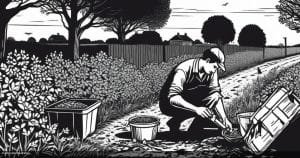
A man found guilty of dumping waste on Redmans Lane in Shoreham has been handed a suspended prison sentence, 150 hours of unpaid work and a £1,500 costs order after Sevenoaks District Council brought the case to court.
Residents in Shoreham and the surrounding villages now know that at least one person who treated their country lane as a rubbish dump has a criminal conviction to show for it. Sevenoaks District Council announced the outcome on social media, saying the offender was found guilty of fly-tipping on Redmans Lane — a quiet rural road in the Shoreham area of the district.
The court ordered the man to complete 150 hours of unpaid work in the community, pay £1,500 in costs, and receive a suspended prison sentence. The council has not published the length or conditions of the suspension. Fly-tipping is a criminal offence under section 33 of the Environmental Protection Act 1990 — the law that makes it illegal to dump controlled waste without a permit — and carries a maximum penalty on summary conviction of 12 months in prison, an unlimited fine, or both.
Why the council pursued prosecution
Sevenoaks District Council, as the local authority responsible for investigating and prosecuting fly-tipping in the district, chose to take the case to court rather than issue a fixed penalty notice. Councils can issue on-the-spot fines of up to £400 for smaller fly-tipping offences, but a full prosecution opens the door to tougher penalties. According to the council’s communications, the aim is to deter others from doing the same on rural lanes across the district.
Redmans Lane is the sort of road that attracts illegal dumping — tucked away, lightly trafficked, with little passing trade to act as a deterrent. Waste left there can block the carriageway, damage the verge and create health risks from hazardous materials. Walkers, cyclists, horse-riders and motorists who use the lane all bear the consequences.
What critics say about the sentence
Not everyone thinks the outcome goes far enough. Some residents and environmental campaigners argue that suspended sentences and community orders send too soft a message to habitual or commercial fly-tippers, and that courts should hand down immediate custodial sentences more often. There are also broader concerns that prosecuting individual offenders — while welcome — does not tackle the rogue waste carriers and cheap-disposal networks that drive much of the problem in the first place.
Civil liberties and penal reform advocates take a different view, cautioning against pushing courts towards imprisonment for environmental offences and pointing instead to restorative approaches and tougher regulation of waste businesses. Environmental policy experts note that sentencing is ultimately a matter for the independent courts, which must weigh the seriousness of the offence, the harm caused and any mitigation before deciding on the penalty.
The wider picture in Kent
Fly-tipping is not a problem unique to Shoreham. Across Kent, local authorities recorded just over 12,500 incidents in 2013-14; by 2023-24 that figure had risen to around 14,540, according to data compiled by Kent County Council using Defra statistics. The numbers peaked at about 19,470 incidents in 2019-20. Nationally, Defra records hundreds of thousands of fly-tipping incidents every year, with household waste making up the largest share.
Kent’s joint waste strategy for 2026 to 2031 — drawn up by Kent County Council and the Kent Resource Partnership, which includes Sevenoaks District Council — identifies fly-tipping as a priority, with plans for enforcement, public education and intelligence-led operations. But the strategy’s ambitions depend on councils having the resources to investigate and prosecute, and clean-up costs ultimately fall on local taxpayers when offenders are not caught.
What residents can do
Anyone who witnesses fly-tipping in Sevenoaks district is encouraged by the council to report it promptly — noting the location, time, any vehicle registration and, if safe to do so, photographic evidence. The council asks residents not to disturb or move fly-tipped material themselves, as some waste can pose health and safety risks.
The Redmans Lane conviction is final; the council’s next step is to continue monitoring and prosecuting fly-tipping offences across the district.