
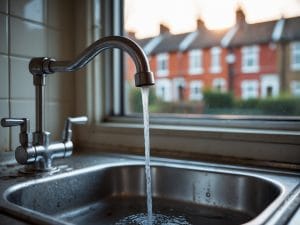
South East Water has reported fresh supply problems affecting some Tunbridge Wells customers, the latest disruption in a run of failures stretching back to late 2025.
Tunbridge Wells Borough Council posted a public alert confirming that South East Water has reported problems with water supplies hitting some customers across the borough. The council said it is in direct contact with the company and will pass on updates as they come in.
This is the latest in a string of serious failures. In late November 2025, a faulty batch of coagulant chemicals — a substance used to help clean raw water at the treatment stage — was added at Pembury Water Treatment Works, forcing the plant to shut down entirely. Around 24,000 homes in Tunbridge Wells, Pembury, Frant and Eridge lost water or saw pressure drop sharply. A boil-water notice stayed in place for about nine days before being lifted around 12 December 2025. Schools, restaurants, pubs and some GP practices in the town closed or had to change how they operated.
Then Storm Goretti brought a second wave. Between 6 and 17 January 2026, burst mains and freeze-thaw conditions caused further outages across Kent and Sussex — including parts of Tunbridge Wells — affecting between roughly 6,500 and 30,000 customers. At the height of the January crisis, around 25,000 properties across Kent and West Sussex had no water or intermittent supplies. Kent County Council and South East Water declared a major incident.
South East Water has apologised repeatedly and acknowledged that its network is too dependent on a single asset — Pembury works — which it says has contributed to the resilience problems. According to the company’s own statements, repair teams have been working around the clock during outages, and the Drinking Water Inspectorate has served a risk notice on Pembury works and opened a formal investigation into the November failure.
But residents and local businesses haven’t been satisfied. Many have described conditions as “grim” after being left without water for days at a stretch. Critics argue the infrastructure is fragile and poorly maintained, and that South East Water’s reliance on a single treatment works was a disaster waiting to happen. Some residents — particularly those without cars or with mobility problems — have said bottled water provision was hard to reach, and that communication from the company was sometimes unclear or slow to arrive.
During previous incidents, water collection points were set up at Tunbridge Wells Sports Centre car park, Knights Park cinema car park, and The Amelia Scott. South East Water also delivered bottled water to vulnerable customers on its Priority Services Register — a list of customers who need extra support, such as elderly or disabled people.
Water industry analysts have pointed out that the problems in Tunbridge Wells aren’t unique — ageing infrastructure, high leakage rates and climate pressures are straining networks across England and Wales. That context won’t be much comfort to anyone who’s spent a week boiling water before brushing their teeth.
Key information
- Check your supply: Test your cold kitchen tap first. Visit South East Water’s website for its live incident map showing current outages by area.
- Bottled water: If collection points are opened, South East Water will announce locations and opening hours via its website and social media. Bring your own containers.
- Vulnerable customers: To request home delivery of bottled water or register for extra support during outages, contact South East Water’s Priority Services Register.
- Boil-water notices: If one is in force in your area, boil tap water before drinking, cooking, brushing teeth, or washing children and vulnerable adults — check South East Water’s website for whether a notice currently applies to your street.
Tunbridge Wells water supply problems: what South East Water customers need to know Quiz
5 questions