
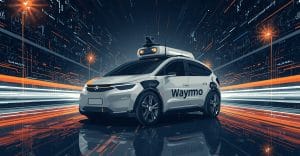
Alphabet’s self-driving unit Waymo will begin manual testing in Munich in 2026 as it prepares to roll out a fully autonomous ride-hailing service in Germany by the end of 2027.
Waymo has announced plans to launch a fully autonomous ride-hailing service in Munich, making the Bavarian capital its first city in the European Union and its second European location overall.
The announcement came in August 2026 via a post on X — formerly Twitter — that opened with a cheerful “Servus, München!” The company confirmed that its vehicles will begin appearing on Munich’s streets within weeks of the announcement, though initially with trained drivers at the wheel rather than operating driverlessly.
Waymo, owned by Alphabet Inc., already runs fully driverless ride-hailing services across more than ten cities globally, largely in the United States. Munich will be the first EU city to join that network, assuming the company secures the necessary regulatory approvals in time.
What Happens Before Any Robotaxi Picks Up a Passenger
Don’t expect to hail a driverless Waymo in Munich any time soon. The 2026 phase is purely groundwork.
Waymo’s so-called autonomous specialists — trained validation drivers — will spend the coming months mapping Munich’s streets in high definition and testing how the Waymo Driver system handles the city’s specific road layouts, traffic patterns, and weather. The company is clear that no commercial rides will be offered to the public during this period.
Only once that validation work is complete, and once the relevant permits are in place, does Waymo intend to open a fully driverless, public-facing service — targeting the end of 2027.
The company has already set up Waymo Germany GmbH, a registered German subsidiary, to handle local operations and compliance with German and EU law.
Working Through Germany’s Regulatory Framework
Germany is, by some measures, ahead of most countries on this. It became the first nation in the world to pass legislation specifically permitting Level 4 autonomous vehicles — where the car handles all driving tasks within a defined area, with no human intervention required — in regular operation on public roads.
That legal framework, built into the German Road Traffic Act, gives companies like Waymo a pathway to operate. But it doesn’t make the process simple. Waymo says it is working closely with the Kraftfahrt-Bundesamt — the KBA, Germany’s Federal Motor Transport Authority — as well as state and Munich city authorities, to secure the permits it needs.
EU-level rules add another layer. The General Safety Regulation sets minimum safety requirements for automated driving functions across member states. And the EU’s AI Act, which classifies certain AI systems as high-risk, is likely to apply to autonomous driving systems operating in the single market, though detailed implementation for this sector is still being worked out.
The Vehicles and the Technology
Industry analysts widely expect Waymo to deploy Jaguar I-Pace electric vehicles fitted with its fifth-generation Waymo Driver autonomous driving system in Munich — the same configuration used in its US commercial services. However, Waymo’s official Munich materials have not confirmed the precise fleet composition, so treat that detail as reported rather than certain.
What is confirmed: the Waymo Driver system will need to learn Munich before it can drive Munich. The city’s road network, its mix of trams, cyclists, and pedestrians, and Bavarian weather conditions all present challenges that require local validation before any driverless service goes live.
Jobs, Concerns, and Wider Questions
Not everyone is cheering. Transport unions and taxi industry groups across Europe have repeatedly raised concerns about what robotaxis mean for drivers’ livelihoods. Specific reactions from Munich’s taxi sector are still emerging, but the debate is well established — and it will only grow louder as Waymo’s timeline advances.
Consumer advocates have their own questions. Who is liable if a Waymo vehicle is involved in a crash? How is data from passengers and bystanders collected, stored, and used? How transparent is the Waymo Driver’s decision-making when something goes wrong?
Urban planners, too, are watching carefully. Some argue that adding more car-based services to city streets — even electric, autonomous ones — risks undermining investment in public transport, cycling, and walking infrastructure.
Waymo frames its Munich service as part of a broader shift towards electric, on-demand mobility. The company emphasises that its step-by-step approach — manual mapping first, validation driving next, public service last — is designed to put safety above speed.
Munich is also, it’s worth saying, a natural choice for a technology company eyeing European expansion. It sits at the heart of Germany’s automotive industry, close to major manufacturers and suppliers, with a tech-literate population and a city government that has shown interest in new mobility solutions.
If Munich works, Waymo has signalled it has wider European ambitions. Reports point to exploratory activity in cities including Madrid, Lisbon, Paris, and Amsterdam — though none of those has a confirmed timeline.
What This Means for Kent Residents
There’s no Waymo service coming to Kent any time soon — the Munich launch is a German story, and the UK sits outside the EU regulatory framework that governs it. But the Munich rollout will give UK policymakers a real-world test case for how Level 4 autonomous vehicles can be regulated and deployed in a busy European city, which could inform future decisions about self-driving trials on British roads. Kent residents travelling to Munich from late 2027 onwards may, if Waymo meets its schedule, find a fully driverless taxi waiting for them at the airport before anything similar exists back home. And for anyone in Kent working in automotive technology, insurance, mapping, or mobility software, Europe’s first EU robotaxi network could open up supply chain and partnership opportunities worth watching.
Source: @Waymo
Waymo to Launch Fully Autonomous Robotaxi Service in Munich by End of 2027 Quiz
5 questions