
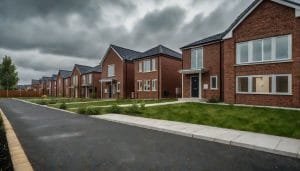
Maidstone Borough Council’s housing committee considered a proposal on 15 September 2026 to reopen its Housing Revenue Account for the first time since 2004, transferring 56 affordable and supported housing units into the new account and committing £500,000 in seed reserves.
Maidstone Borough Council’s Housing and Community Cohesion Policy Advisory Committee considered a proposal on 15 September 2026 to reopen its Housing Revenue Account (HRA) — a ring-fenced landlord account required by law for councils holding social housing — with the aim of building more than 1,000 affordable homes across the borough.
Why the account was closed and why it is being reopened
The council closed its HRA in 2004 when its housing stock was transferred to Maidstone Housing Trust, now known as Golding Homes. Officers’ papers explained that the council has since been building up a new portfolio of affordable and supported housing and now proposes to reopen the account on 1 October 2026, ahead of the statutory threshold of 1,000 properties, in order to embed systems and procedures at an early stage.
The Corporate Strategy Year 2 Action Plan, agreed by Cabinet on 25 February 2026, includes a commitment to deliver more than 1,000 homes as part of a ‘Quality Homes for Life’ programme for social and affordable housing. Officers noted that the Ministry of Housing, Communities and Local Government had been informed of the intention and was content with the approach taken.
What would transfer into the account
The opening stock would comprise 56 units already used as affordable rented housing and specialised supported housing. Officers recommended that these be transferred at certified market value on 1 October 2026, with no changes proposed to existing tenancy agreements, rents or service charges within the current financial year. The shortfall between the net costs of bringing the homes to completion and their certified market value — estimated at £273,000 — would be charged against the council’s Housing Investment Fund, which currently stands at £15.5 million.
Officers recommended that £500,000 be transferred from the council’s unallocated reserves to provide the HRA with an initial reserve equivalent to approximately three months of annual revenue, rising to around £5 million in five years.
Borrowing and financial arrangements
The papers proposed that HRA borrowing be accounted for separately from General Fund borrowing. Officers noted that once the HRA is open, the council would be able to access Public Works Loan Board borrowing at a discount of 40 basis points compared with the standard rate available to councils — making it financially advantageous to borrow for affordable housing directly through the HRA. The opening borrowing would be charged at the council’s current average cost of borrowing of 1.79 per cent. A 30-year business plan was included in the papers, which officers said demonstrated that the HRA would be self-financing and would not run a deficit at any time.
Governance and next steps
Officers noted that no permission from the Secretary of State is required to open an HRA, but that a letter declaring the intention would be sent to the Secretary of State following Cabinet approval. The committee was asked to recommend the proposals to Cabinet, which was scheduled to consider the matter on 16 September 2026.
The council had not published the minutes of the meeting at the time of writing, so the committee’s decision is not yet on the public record.
Sources
- Maidstone Borough Council — MOVED – Housing and Community Cohesion Policy Advisory Committee, 15 September 2026 (agenda and papers)
- Re-Opening the Housing Revenue Account (HRA) — report to Housing and Community Cohesion Policy Advisory Committee (Maidstone Borough Council, 15 September 2026)
- Housing Revenue Account Business Plan 2026/27 to 2036/37 — Appendix 1 (Maidstone Borough Council)
Top image: illustrative, computer-generated. Illustrative AI-generated image. This is not a photograph of any real Maidstone housing development or site.