
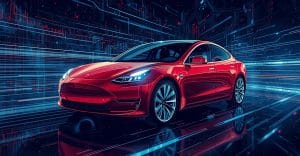
Tesla’s driver-assistance software reportedly completed a 2,732-mile trip across America without a single disengagement — but a human was watching the whole time.
A Tesla Model 3 has driven itself from Los Angeles, California, to Myrtle Beach, South Carolina — a journey of 2,732.4 miles — without the driver physically intervening once. The trip took 2 days and 20 hours, included stops at Tesla Supercharger stations and car parks, and was completed entirely using Tesla’s Full Self-Driving (Supervised) software. It’s the kind of headline that sounds like science fiction. But there’s an important word in the name of that system: Supervised.
The driver behind the wheel throughout the journey was David Moss, whose account of the trip has been widely covered in automotive and technology media. According to that reporting, Moss accumulated 10,638.8 miles of FSD driving without a single intervention — the coast-to-coast run being the centrepiece of that total.
Tesla’s North America account posted about the achievement, saying: “First Tesla to drive itself from coast to coast w/ FSD Supervised. 0 interventions, all FSD.” The post frames it as a milestone for the technology, and within Tesla enthusiast circles and automotive media, it has been treated as exactly that.
What FSD Supervised Actually Means
Here’s where it gets important to read the small print — or in this case, the product name itself.
Full Self-Driving (Supervised) is not, by Tesla’s own description, a fully autonomous system. Tesla is explicit that drivers must remain attentive and ready to take over at any moment. The system sits at what regulators classify as Level 2 driver assistance — meaning the car can handle steering, acceleration, and braking in many situations, but a human must supervise and bears legal responsibility for the vehicle at all times.
So when the post says the car “drove itself,” that’s technically accurate in the sense that no human physically touched the controls. But David Moss was present, alert, and legally in charge of the vehicle for every one of those 2,732.4 miles. Zero interventions doesn’t mean zero supervision. It means the software handled everything it encountered without needing the driver to step in — which, if you’ve ever done a long motorway run and had a lane-assist system panic at a junction, is genuinely impressive.
No US or UK regulator has certified this route or this drive as fully autonomous. The classification remains supervised driver assistance.
A Milestone, With Caveats
Coverage from Tesla-focused outlets and general automotive media has largely framed the trip as historic. Given what driver-assistance software can now do, the distance and duration are striking figures. Completing a cross-country American road trip — with all its variable road conditions, weather, urban traffic, and charging logistics — without a single disengagement is a meaningful data point for where the technology stands.
Tesla’s tweet referred to “several coast-to-coast drives,” though the research available clearly documents one coast-to-coast journey in detail. The broader claim of multiple such drives hasn’t been independently verified from the available sources.
The vehicle used was a Tesla Model 3 running newer FSD software and hardware. Tesla has been iterating on FSD for several years, and the current Supervised version represents a big step forward from earlier releases, which required far more frequent driver takeovers.
The Bigger Picture for Driver-Assistance Technology
The gap between what driver-assistance systems can do and how they’re marketed has been a long-running tension in the industry. Tesla’s own language is careful — the word “Supervised” is right there in the product name — but headlines and social media posts don’t always carry that nuance with them.
That matters because public understanding of what these systems can and can’t do has real safety implications. A driver who believes their car is fully autonomous and stops paying attention is in a very different situation from one who understands they’re using advanced assistance software and stays engaged.
Other manufacturers are developing their own advanced driver-assistance systems, and the regulatory conversation about how to classify and certify these technologies is ongoing in both the US and the UK. For now, no consumer vehicle sold in either country is legally classified as fully self-driving.
What This Means for Kent Residents
For anyone in Kent considering a Tesla or another vehicle with advanced driver-assistance features, this story is a useful reminder: impressive as the technology is becoming, supervised systems still require your full attention behind the wheel, and UK law reflects that. If you’re shopping for a new car and a salesperson mentions self-driving capability, it’s worth asking exactly which level of autonomy is on offer — because right now, for vehicles on Kent’s roads, the answer will be driver assistance, not full automation.
Source: @Tesla
Tesla FSD Supervised Completes Coast-to-Coast US Drive With Zero Human Interventions Quiz
5 questions