
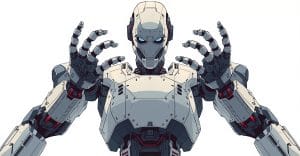
The new four-fingered design nearly doubles the movement range of its predecessor and is built around sim-to-real reinforcement learning for industrial use.
Boston Dynamics announced on 1 October 2026 that its Atlas humanoid robot has a new hand design with 13 degrees of freedom — nearly double the seven degrees of freedom in the previous GR2 hand. The announcement, posted to the company’s official blog, positions the hands as a platform for dexterous physical work and high-fidelity robot simulation.
That jump from seven to 13 is not a minor tweak. Each degree of freedom represents an independent direction of movement available to a mechanism, so the difference between the two designs is major in what the robot can actually do with its hands.
Four Fingers, Not Five — and a Much More Capable Thumb
The new hand has four fingers rather than the five you’d find on a human hand. Boston Dynamics says the choice reflects a deliberate trade-off: dropping one finger allowed the company to build a considerably more capable thumb and keep the overall mechanical design simpler.
For their part, the thumb alone has four degrees of freedom. Each of the remaining three fingers has three. That gives the thumb a level of independent movement that, according to Boston Dynamics, enables more precise gripping patterns — including pinch grasps, tripod grasps, and in-hand object reorientation, where the robot adjusts an object’s position without setting it down first.
The hands also include pressure-based tactile sensing across the fingertips and palm. Boston Dynamics says this allows Atlas to detect when an object is beginning to slip and respond before it drops it entirely. Whether that works reliably across the unpredictable range of objects found in a real factory floor is a different question — and one the announcement doesn’t answer.
Direct Actuation and the Simulation Question
One of the more technically telling details in the announcement is how the joints are driven. The new design uses direct actuation, meaning the motors sit at the joints themselves rather than relying on cables routed from elsewhere in the hand or arm. Boston Dynamics also uses a single actuator type throughout, which could simplify maintenance and manufacturing compared with designs that mix different motor types.
Secondary reporting has suggested the joints are backdrivable — meaning the fingers can yield under external force rather than resist it rigidly — which may improve how the hand handles unexpected impacts. That detail was not independently confirmed from the official Boston Dynamics material reviewed, so it should be treated with some caution.
The company is explicit that the hands were built with high-fidelity simulation in mind. Sim-to-real reinforcement learning is the practice of training a robot’s behaviour inside a computer simulation, then transferring what it’s learned to physical hardware. The idea is that you can run thousands of training cycles in simulation far faster and cheaper than you could in the real world. But the technique only works well if the simulation accurately reflects how the physical robot actually behaves — which is part of why Boston Dynamics says the hand’s mechanical design was shaped by simulation requirements from the start.
What the Announcement Does and Doesn’t Establish
Secondary sources have reported that Atlas can lift more than 100 pounds — around 45 kilograms — but that figure could not be independently verified from the official Boston Dynamics material reviewed, and should be treated as unconfirmed for now.
What Boston Dynamics has not announced is equally worth stating plainly. There is no commercial release date, no pricing, no confirmed production schedule, and no named industrial customers. The announcement describes a hardware platform and its engineering rationale. It does not establish that Atlas with these hands is ready for factory deployment at scale.
That gap between a compelling demonstration and reliable real-world performance is one the robotics industry has navigated repeatedly. A robot that handles objects smoothly in a controlled setting may behave very differently when confronted with wet surfaces, irregular packaging, or the noise and vibration of a working warehouse.
Boston Dynamics has not yet provided a named spokesperson quote in the material reviewed for this article, but the company’s blog frames the design objective clearly: reduce the trade-off between dexterity, simulation accuracy, and practical industrial use. Whether the GR3 hands achieve that in practice nobody knows yet.
Industry Context
Atlas is not the only humanoid robot attracting serious engineering investment right now. Firms including Figure AI, Agility Robotics, and Tesla’s Optimus programme are all working on similar problems. But the specificity of Boston Dynamics’ announcement — 13 degrees of freedom, a named previous design to compare against, a clear explanation of the actuation approach — gives it more engineering substance than many competitor announcements, which tend to lead with video footage rather than technical detail.
The move to four fingers is also worth watching. It runs counter to the instinct to replicate the human hand exactly, and suggests Boston Dynamics is prioritising what works in practice over what looks most human.
What This Means for Kent Residents
There is no direct impact on Kent residents, councils, or local public services from this announcement. But if Atlas is eventually commercialised for industrial work, businesses in Kent’s manufacturing, logistics, and warehousing sectors could become potential customers or competitors to operations that adopt the technology. Workers and school leavers considering careers in engineering, controls, machine learning, or industrial maintenance may find that robotics skills carry growing value in the years ahead, though any employment effects from this specific announcement remain entirely speculative at this stage.
Source: @BostonDynamics
Boston Dynamics Unveils 13-Degree-of-Freedom Hands for Atlas Humanoid Robot Quiz
5 questions